Guangdong Panorama | 6-Day In-Depth Tour of Guangzhou, Foshan, Jiangmen Kaiping Diaolou, and Shenzhen
Meals: Self-provided
Accommodation: Guangzhou
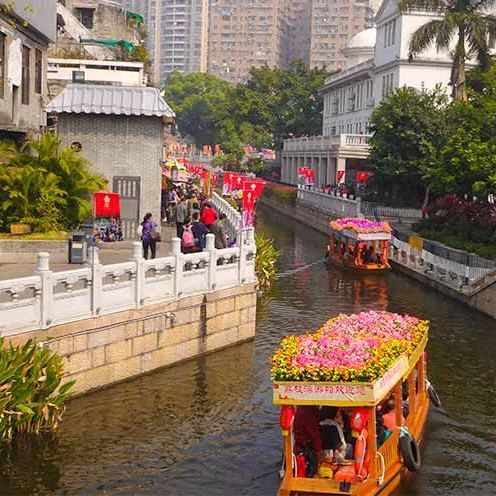
Welcome to Guangzhou , the capital of Guangdong Province! Our driver will meet you at the airport/train station exit and escort you to your hotel for check-in and rest. You are free to arrange your remaining time as you wish. If you are tired, you can rest at the hotel to relieve travel fatigue. If you have time to spare, you can explore the surrounding area, or consult your tour guide for travel advice based on your own time and interests.
Suggested way to get there :
1. By Air: Guangzhou Baiyun International Airport (CAN) is the main airport in Guangzhou, with numerous domestic direct flights to cities such as Beijing, Xi'an, Shanghai, Chengdu, Hangzhou, Kunming, and Hong Kong, as well as international direct flights to cities such as Tokyo, Seoul, Singapore, Ho Chi Minh City, Kuala Lumpur, Bangkok, Dubai, and Los Angeles, making transportation very convenient.
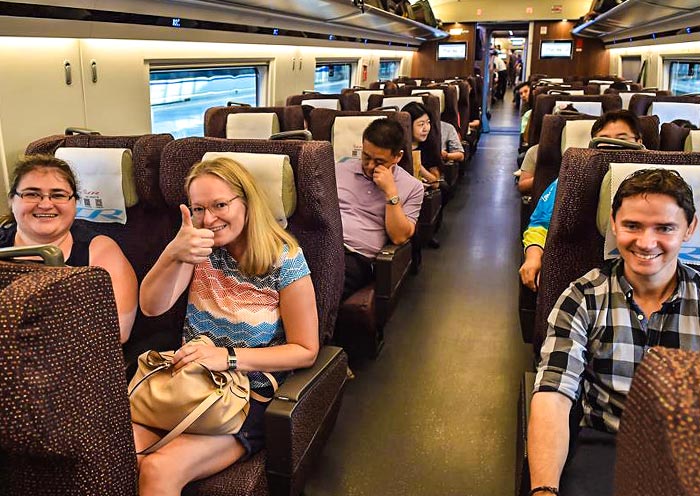
2. By train: Guangzhou South Railway Station and Guangzhou Railway Station are high-speed rail hubs connecting Guangzhou with other major cities in China. You can take high-speed trains from cities such as Hong Kong (about 1 hour), Shenzhen (about 0.5 to 1.5 hours), Guilin (2.5 to 3.5 hours), Guiyang (about 4 to 6.5 hours), Beijing (8 to 10 hours), Shanghai (7 to 8.5 hours), Chengdu (9 to 10 hours), Xi'an (8 to 9 hours), and Hangzhou (6 to 7.5 hours) to Guangzhou.
Meals: Breakfast and lunch included
Accommodation: Guangzhou
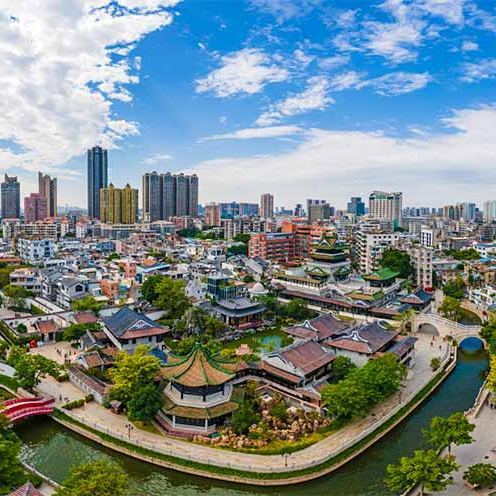
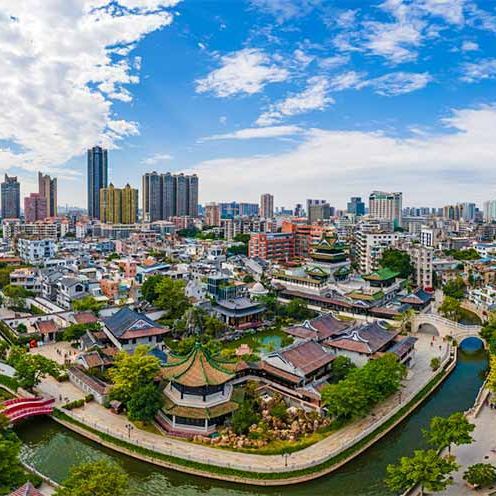
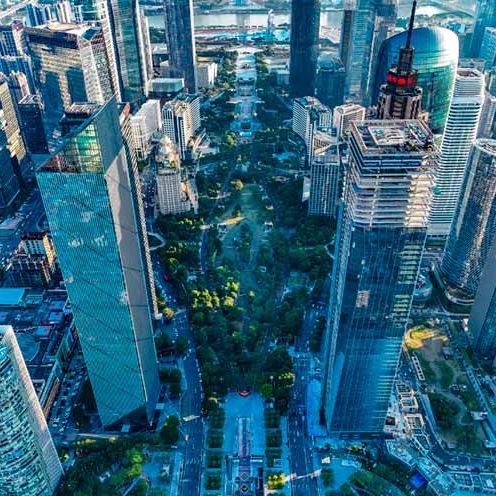
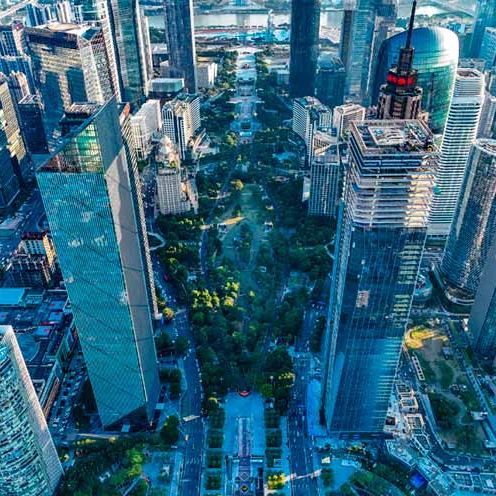
Guangzhou , a hub city in the Guangdong-Hong Kong-Macao Greater Bay Area and a renowned trade and cultural center in South China, boasts a history of over 2,200 years. Leveraging its port city advantages, it has blended local and foreign cultures to create a unique urban landscape. As the birthplace of Lingnan culture, Guangzhou has nurtured rich cultural symbols such as Cantonese language, cuisine, and opera, showcasing its profound cultural heritage. Furthermore, Guangzhou's central axis , alongside Beijing's, is a rare example of the continuity of ancient Chinese urban axes, a rarity in world urban history. Strolling along this axis where the ancient and modern blend, one can witness the temporal and spatial folds from the ruins of the Nanyue Palace to the modern CBD, and feel the enduring pulse of Lingnan civilization.
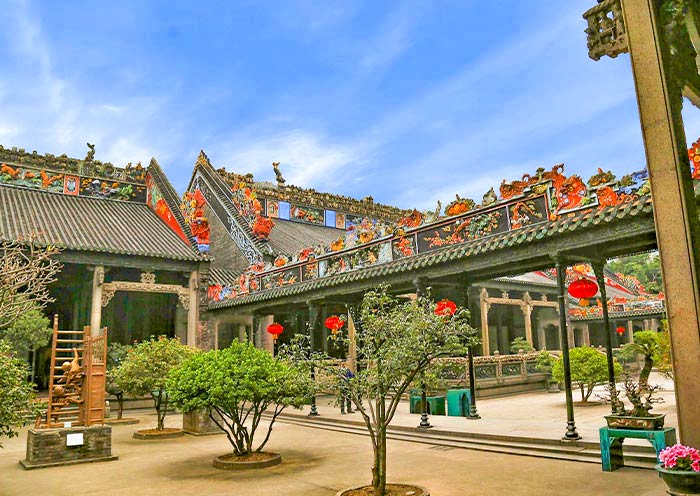
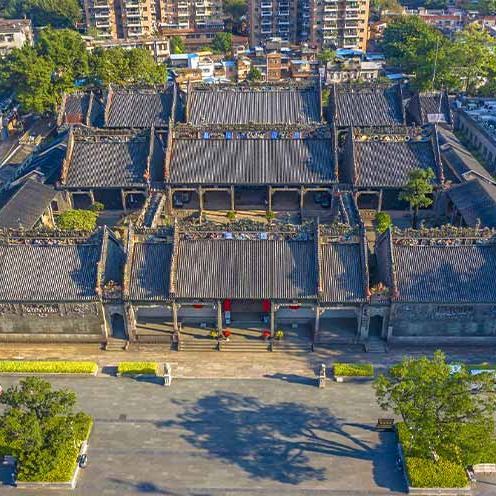
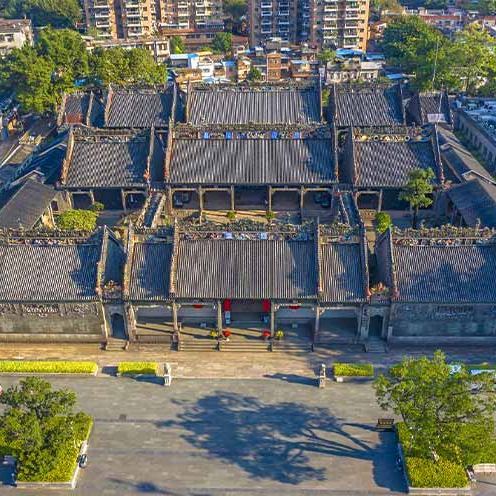
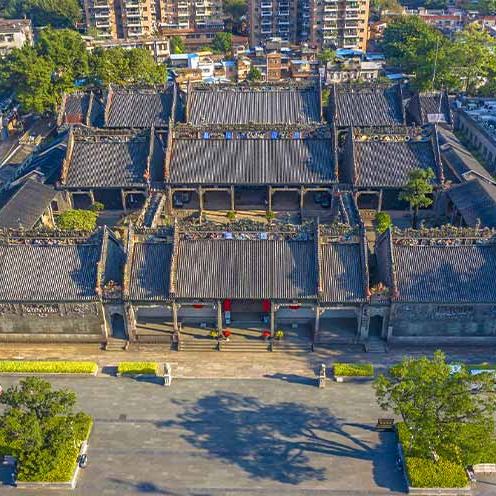
Today's itinerary begins at the Chen Clan Ancestral Hall. The Chen Clan Ancestral Hall is a pinnacle of traditional Lingnan architecture and one of the largest, best-preserved, and most exquisitely decorated ancestral halls in China, renowned as the "Pearl of Lingnan Architectural Art" and the "Crown of Ancestral Halls in Guangdong." Built in 1893 by the Chen clan from 72 counties in Guangdong, its layout features a three-axis, three-section, nine-hall, and six-courtyard design, with symmetrical decoration along the central axis. It embodies the pinnacle of Lingnan's "three carvings, two sculptures, one casting, and one painting" craftsmanship, earning it the title of "A Brilliant Hall of Folk Decorative Art." It is an excellent place to appreciate Lingnan architecture and ancestral hall culture. Furthermore, the Chen Clan Ancestral Hall houses the Guangdong Folk Arts Museum , where visitors can admire traditional Guangdong crafts such as ivory carving, jade carving, wood carving, Cantonese embroidery, and Guangcai porcelain.
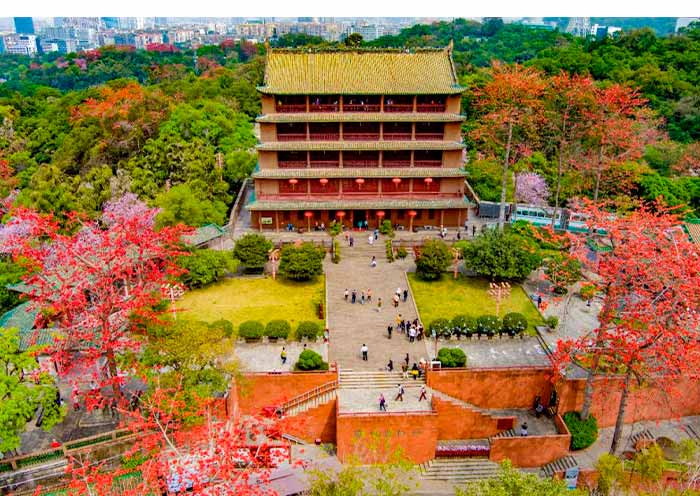
Then, you can explore Yuexiu Park like a local. Yuexiu Park is the largest comprehensive park in downtown Guangzhou and one of the city's landmarks, renowned as one of the "Eight Scenic Spots of Guangzhou." It preserves numerous historical and cultural relics: the ruins of Zhao Tuo's "Chaohan Terrace," the remains of the wooden sluice gate of the Nanyue Palace, the longest and most complete Ming Dynasty city wall in Guangzhou, Zhenhai Tower, the Five Immortals Temple (the first tower in Lingnan), the stele commemorating Sun Yat-sen's study and administration, and the Sun Yat-sen Memorial Monument (498 granite steps). Moreover, Yuexiu Park is lush with trees and boasts beautiful scenery. A must-see is the 11-meter-high granite sculpture group— the Five Rams Sculpture —a symbol of Guangzhou and a landmark of the city, embodying a thousand-year-old legend and the city's spirit. Legend has it that during a famine in Guangzhou, five immortals rode rams to deliver ears of grain, and the ram's mouth holds a rice stalk, recreating the legend of "Five Immortals bestowing grain," thus giving Guangzhou the names "City of Rams" and "City of Rice Ears." Near the Five Rams Sculpture, you can see the only remaining section of Guangzhou's ancient city wall from the Ming Dynasty, originally built in the thirteenth year of the Hongwu reign (1380), boasting a history of over 600 years. You can also climb to the top of the hill to visit Zhenhai Tower ( optional, admission fee: 10 RMB/person), a landmark building and historical cultural symbol of Guangzhou, now the main building of the Guangzhou Museum . From the tower, you can enjoy a panoramic view of over 2200 years of Guangzhou's history and culture. Furthermore, from the summit, you can enjoy breathtaking views of the Pearl River and Baiyun Mountain. Additionally, if you are interested, you can visit the Sun Yat-sen Memorial Building Complex to gain a deeper understanding of Sun Yat-sen's revolutionary spirit, Republican-era architectural art, and modern Guangzhou history.
After visiting Yuexiu Park, proceed to the [ Nanyue King Museum Tomb Exhibition Area ], hailed as the "Light of Lingnan Culture." The entire building is constructed based on the tomb site excavated in 1983. Here, you can personally visit the original site of the tomb of King Wen of Nanyue, the highest-ranking, largest, and best-preserved Han Dynasty painted stone chamber tomb in Lingnan, China, and learn about the ancient Chinese royal burial culture. Over 1000 years of precious artifacts have been unearthed here, including China's earliest complete " jade burial suit " and the " Emperor Wen's Seal ," a gold seal symbolizing royal power , which are particularly worth seeing. Additionally, if you are interested, you can also visit the Royal Palace Exhibition Area to see the ruins of the Nanyue Kingdom Palace , renowned as "the essence of Guangzhou's historical and cultural city."
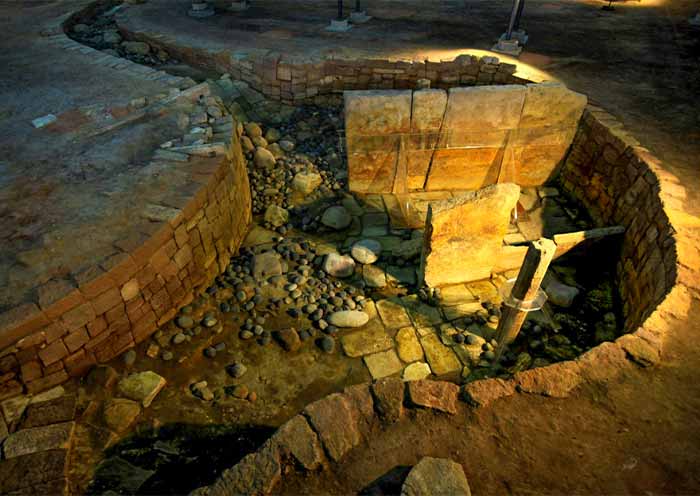
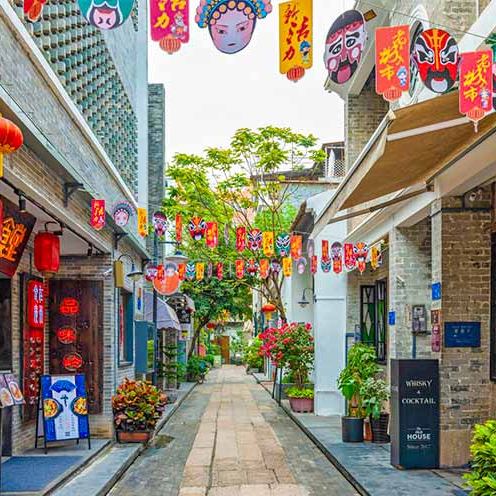
After visiting the Tomb of King Wen of Nanyue, proceed to Beijing Road , known as the "Number One Street in Lingnan" and a "Millennial Commercial Route." This is Guangzhou's oldest urban axis (unchanged for 2200 years since the Qin Dynasty) and one of Guangzhou's most popular pedestrian shopping streets. Stroll along the road, browsing the charming local shops and international brands, sampling authentic Cantonese delicacies (such as rice noodle rolls, clay pot rice, wonton noodles, stir-fried beef noodles, Cantonese roast meats, and char siu buns), and admiring the rich historical and cultural relics: the foundation of the Gongbei Tower from the Song Dynasty , brick-paved roads from the Southern Han Dynasty , the wooden sluice gate of the Nanyue Kingdom (the earliest and most complete wooden sluice gate in the world), the Nanyue Royal Palace (the highest-level palace complex in Lingnan during the Qin and Han Dynasties), the Dafosi Temple (a Buddhist temple in the Lingnan style), and the City God Temple (the largest City God Temple in Lingnan during the Ming Dynasty).
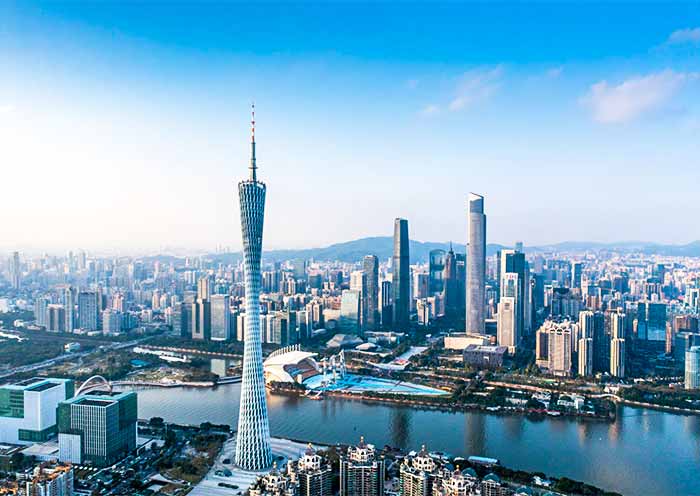
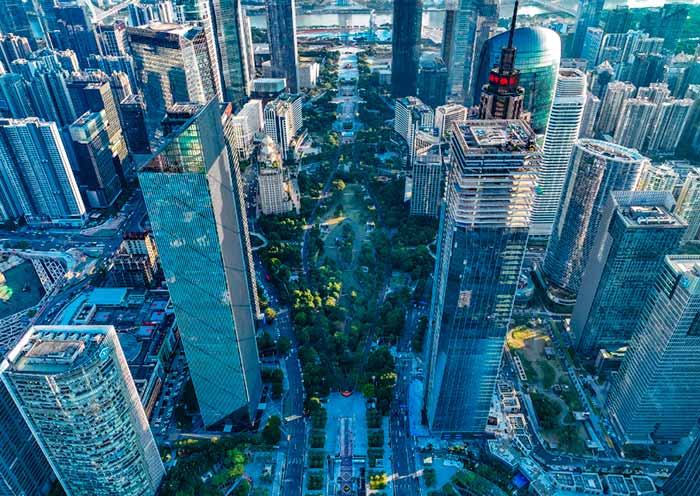
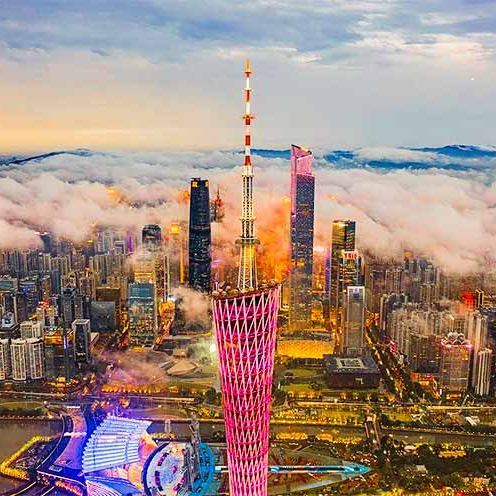
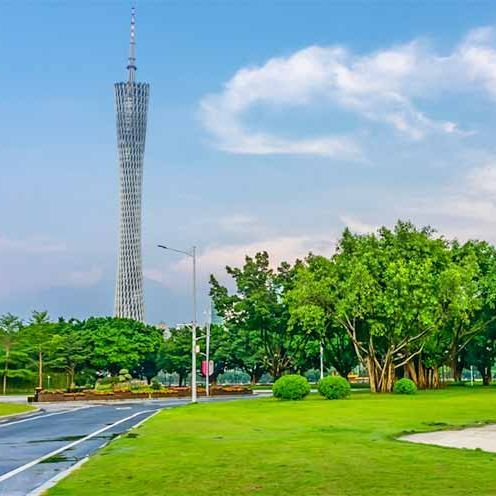
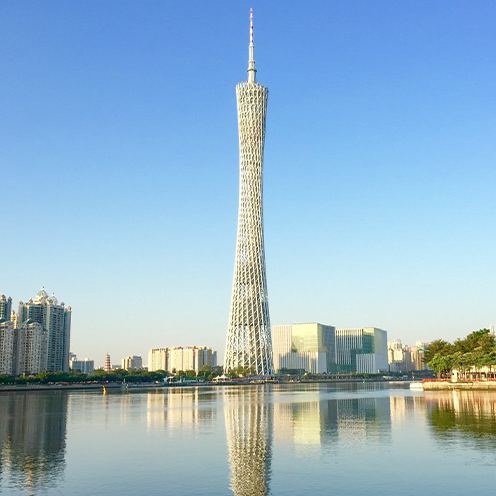
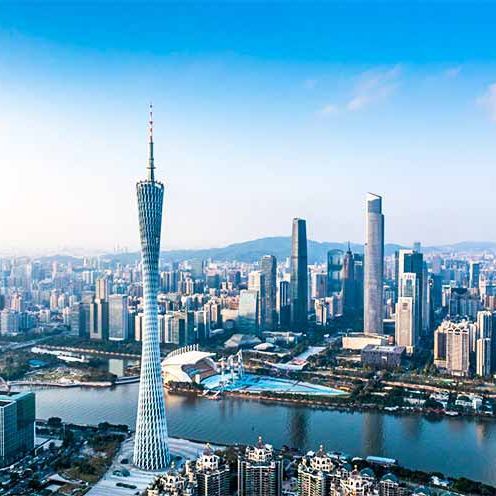
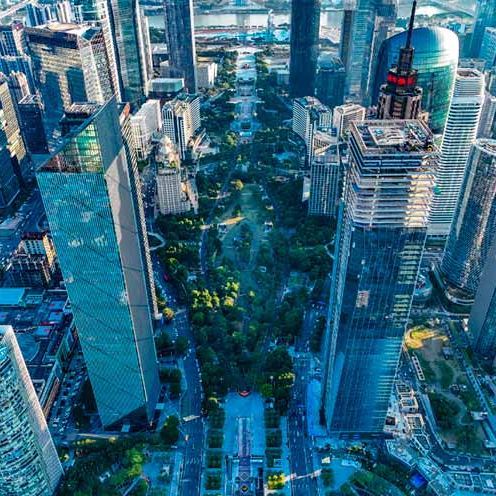
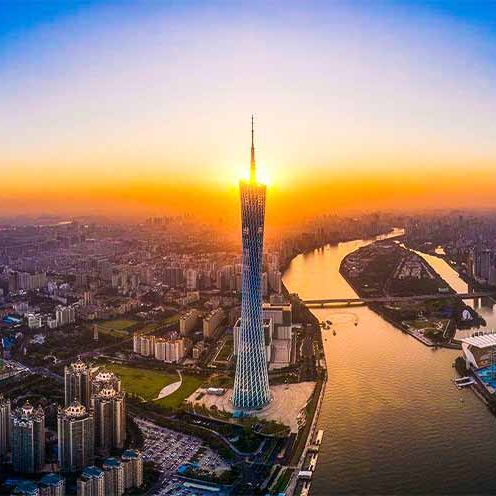
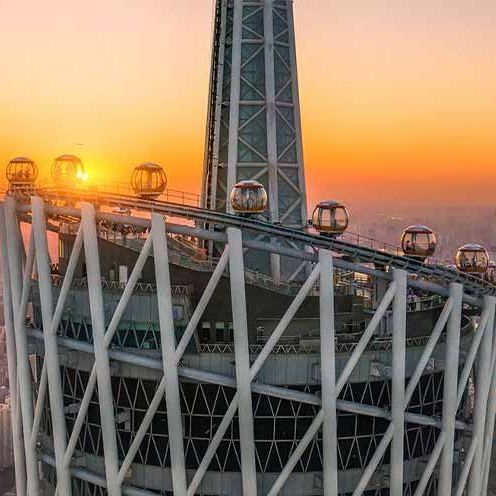
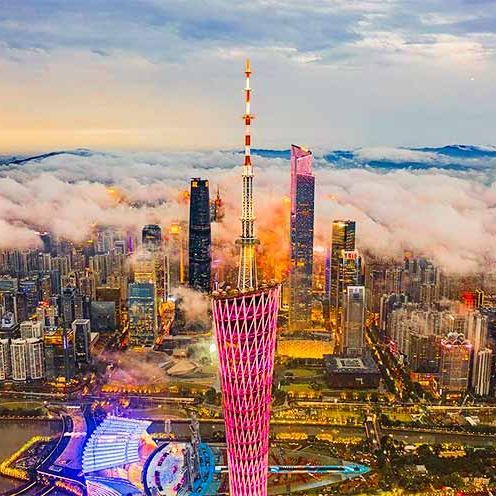
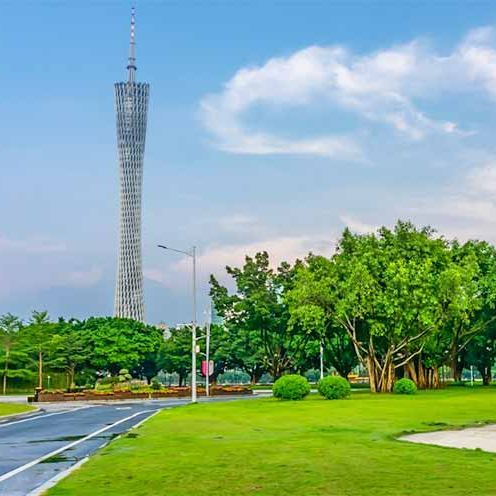
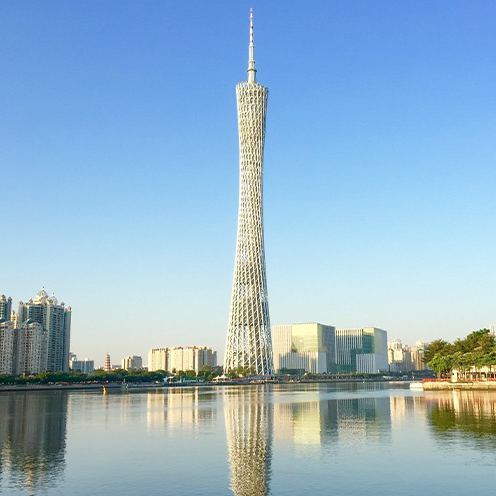
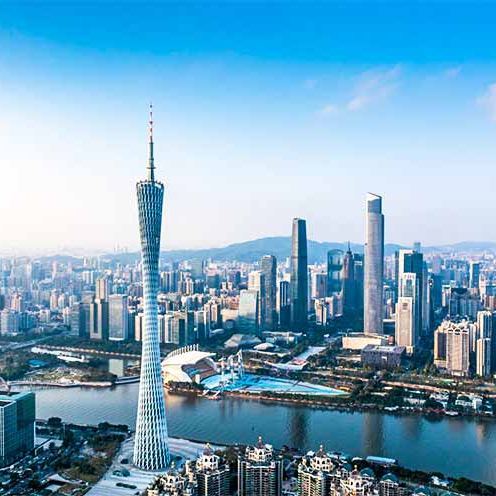
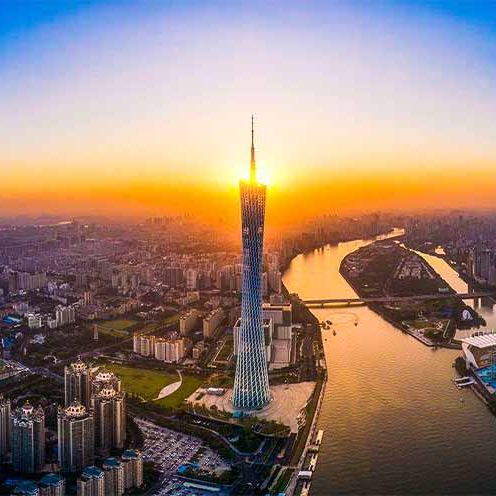
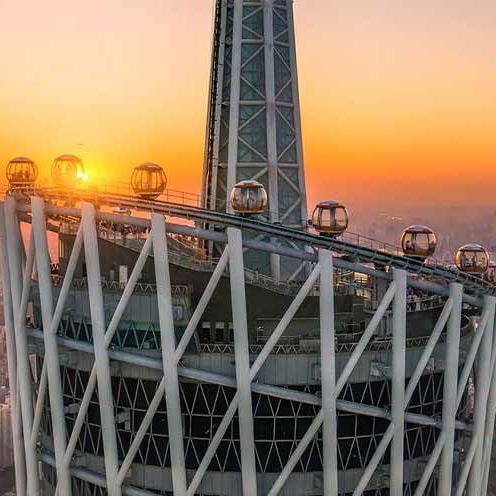
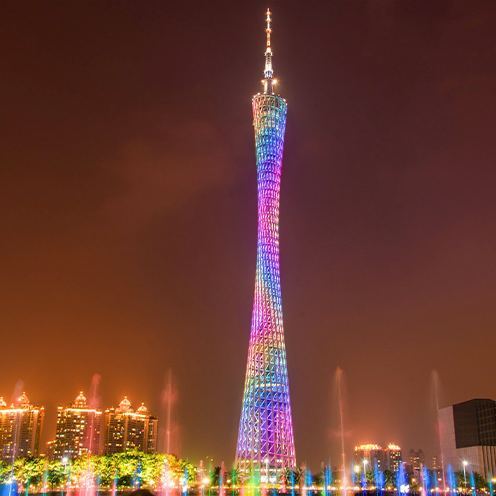
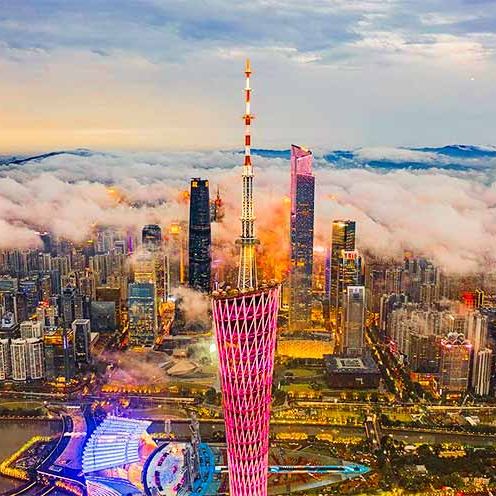
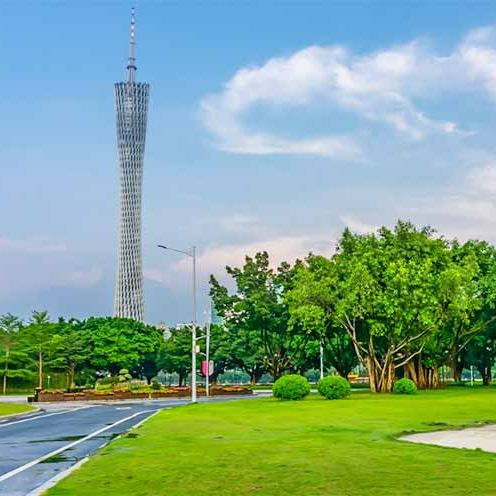
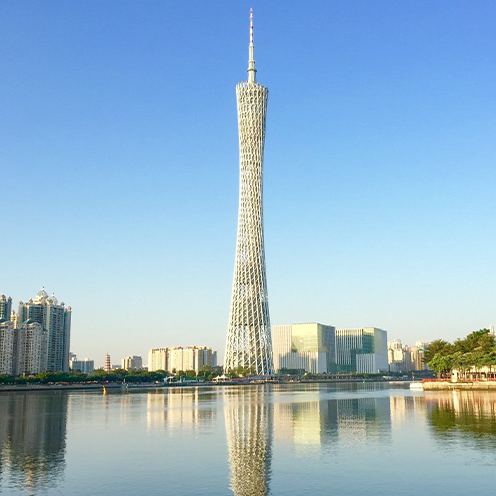
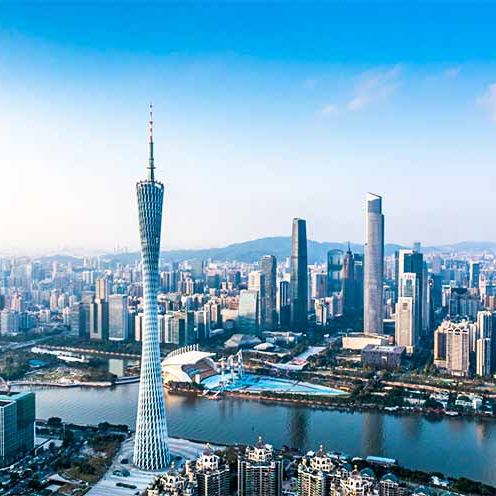
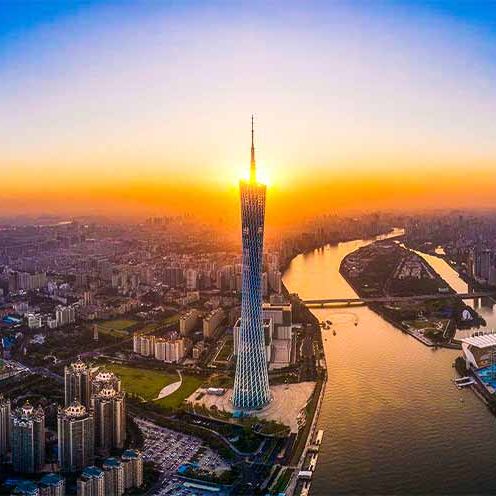
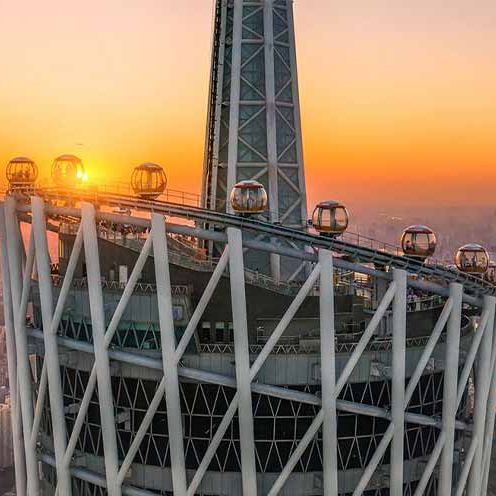
Afterwards, stroll along Guangzhou's ancient central axis to its new central axis, taking you on a journey through time, from the ancient arcades of this millennium-old commercial capital to modern landmarks soaring into the clouds, enjoying the breathtaking view of Guangzhou's 2200-year history. First, you will begin your exploration in Zhujiang New Town, known as "Guangzhou's Manhattan ." This is Guangzhou's largest CBD and one of the world's most densely populated areas with 300+ meter skyscrapers, boasting numerous high-rises: the Guangzhou International Finance Centre (IFC, approximately 440 meters), the Chow Tai Fook Finance Centre (approximately 530 meters, Guangzhou's second tallest building), and the distant Canton Tower (approximately 600 meters, a landmark of Guangzhou and China's tallest tower).
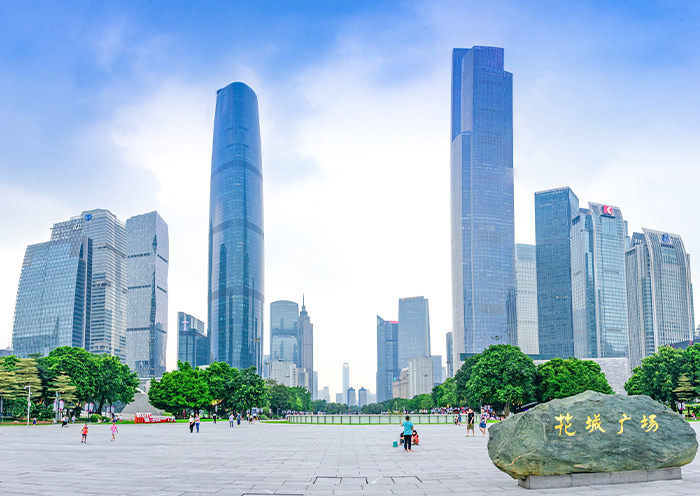
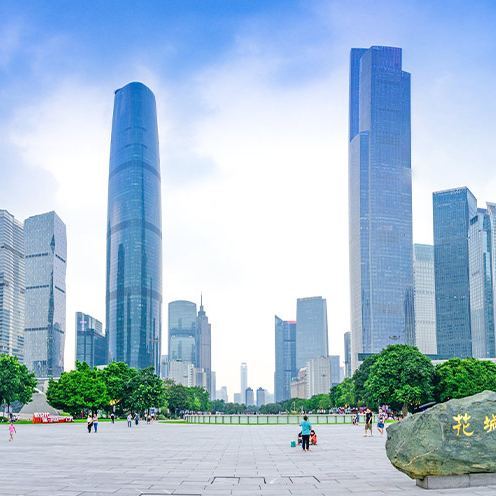
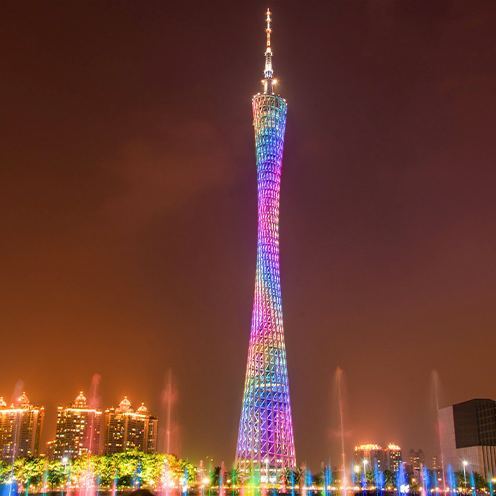
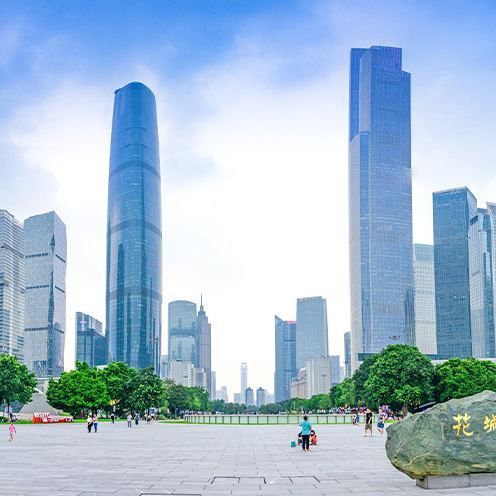
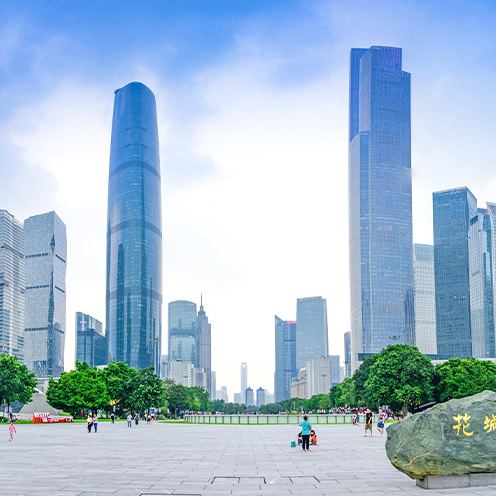
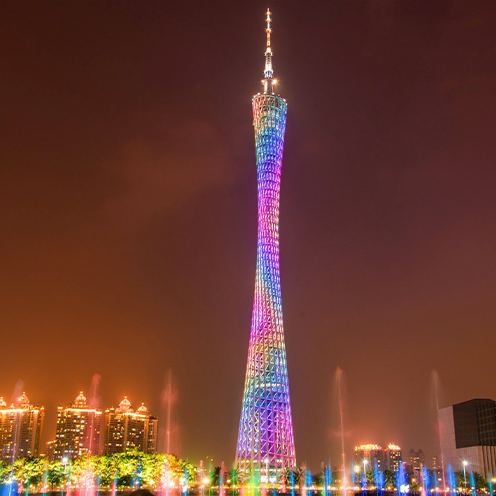
Next, we'll continue our tour to Huacheng Square , a core landmark of Guangzhou's new central axis. This square boasts 39 landmark buildings, including the Guangzhou Library , Guangzhou Opera House , and Guangdong Provincial Museum , earning it the nickname "City Living Room." From here, you can also enjoy a distant view of the towering Guangzhou Tower , whose unique design, with its slender lines resembling a "small waist," is truly distinctive. Furthermore, the dazzling light show at night is a major highlight of Huacheng Square and shouldn't be missed. It's also worth mentioning that the annual Guangzhou International Light Festival held at Huacheng Square is highly recommended, as it's one of the world's three major light festivals.
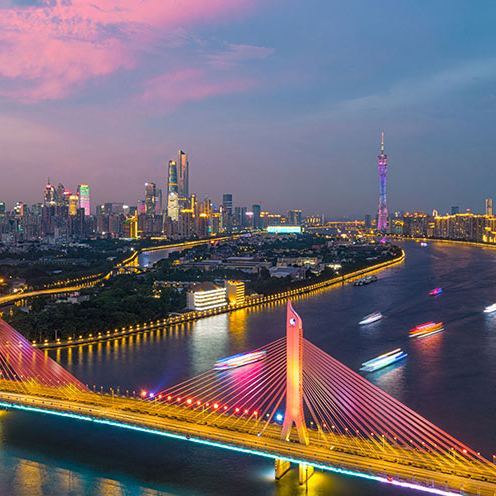
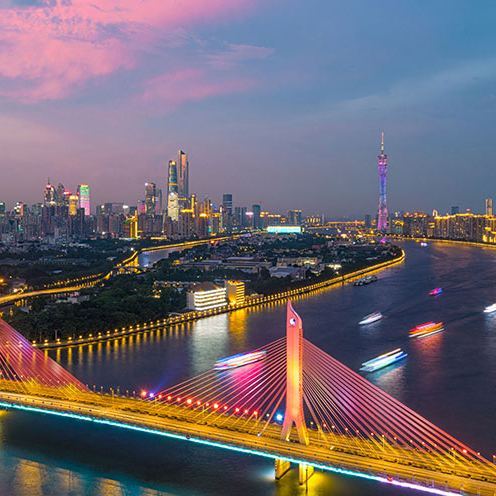
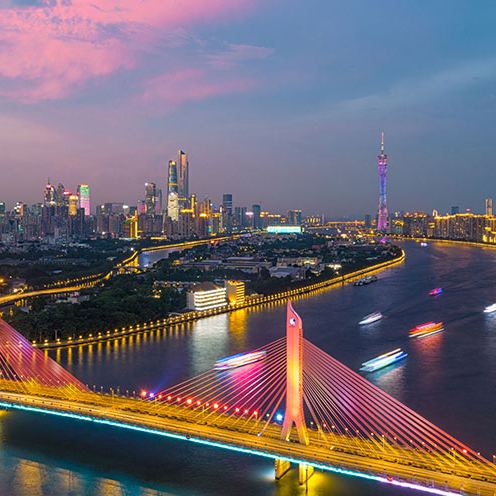
Finally, you can stroll along the Pearl River , Guangzhou's mother river , especially at night: the night view of the Canton Tower, the light and shadow of the bridges, and the lights on both banks are reflected on the surface of the Pearl River, creating a magnificent Lingnan landscape.
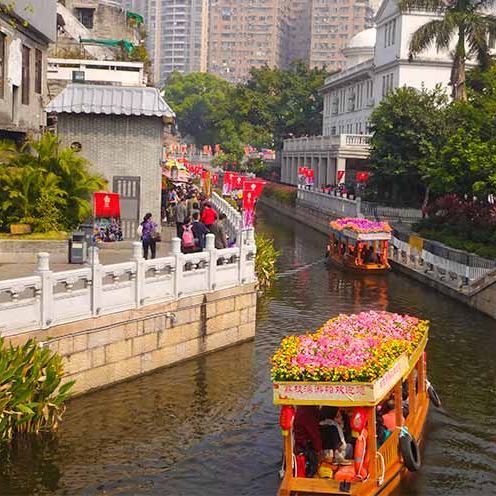
Evening optional activity: From 7 pm to 10 pm, you can take a Pearl River night cruise (approximately 60 minutes) to immerse yourself in Guangzhou's enchanting nightscape and capture the most beautiful night views. The cruise offers stunning views of Guangzhou's magnificent skyline and iconic landmarks such as the Canton Tower, Liede Bridge (with its LED light show), and Haixin Bridge (the world's longest pedestrian bridge).


Meals: Breakfast and lunch included
Accommodation: Foshan City
This morning, you will travel 35 kilometers (approximately 1 hour) from Guangzhou to Foshan , the hometown of international kung fu superstar Bruce Lee and the birthplace of Wing Chun , a Chinese martial art . Masters such as Ip Man and Leung Tsan hailed from Foshan, which is also the hometown of Chinese martial arts master Wong Fei-hung , earning it the reputation of "Hometown of Martial Arts." Furthermore, Foshan is also known as the "Hometown of Pottery," "Hometown of Cantonese Opera," and "Hometown of Lion Dance," making it an excellent place to explore Lingnan culture.
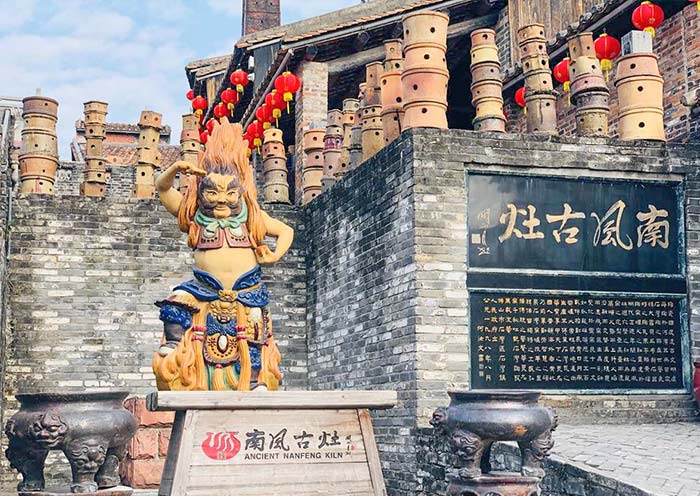
Upon arrival in Foshan, the first stop is the Nanfeng Ancient Kiln , hailed as a "living fossil of ceramics." This is China's only still-operating and oldest wood-fired dragon kiln, dating back to the Zhengde period of the Ming Dynasty. Its over 500 years of uninterrupted kiln fire is listed in the Guinness World Records, perfectly preserving traditional Chinese wood-firing techniques. The Nanfeng Ancient Kiln boasts a unique architecture; the 34.4-meter-high dragon kiln is built southward along the mountainside, its shape resembling a reclining dragon, hence its name. Here, you can immerse yourself in the awe-inspiring power of traditional wood-firing techniques, explore the spectacular sight of a 400-year-old banyan tree coexisting with the high-temperature kiln at the kiln's end, and take photos at the popular " pottery jar wall ," a testament to its craftsmanship. Furthermore, the brick-red chimney , one of the Nanfeng Ancient Kiln's iconic features, along with the ancient kiln and banyan tree, offers the best photo opportunities, earning it the nickname "the most romantic industrial love letter."
In addition to visiting the dragon kiln, you can also visit the Guangdong Shiwan Ceramics Museum (free admission, closed on Mondays) to gain a deeper understanding of the rich history and culture of Shiwan ceramics in Foshan, China; or stroll through the adjacent ancient streets and alleys to feel the charm of red walls, green tiles, and stone-paved roads that have stood the test of time; or explore the Shiwan Doll Street to immerse yourself in Chinese ceramic art and find some Shiwan ceramic ornaments, such as ceramic refrigerator magnets.
Optional activity: Visit Nanfeng Ancient Kiln, where you can experience pottery making (0.5 hours) or paper cutting (1 hour) and appreciate the charm of Foshan's intangible cultural heritage.
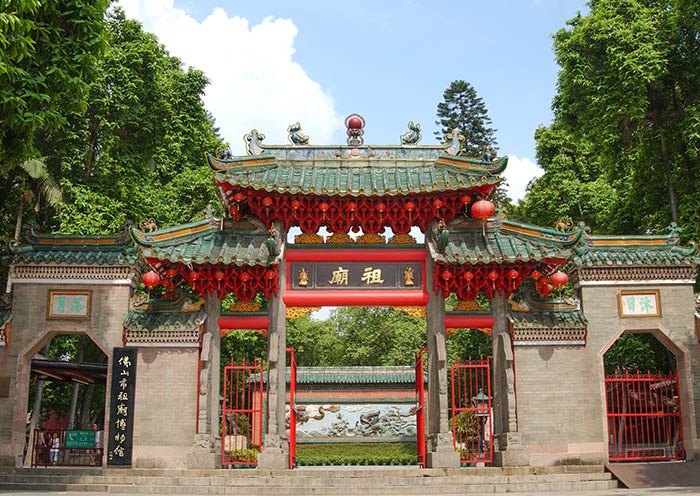
In the afternoon, we will visit the Foshan Ancestral Temple Museum , known as the "Palace of Oriental Folk Art." This is a must-see for tourists in Foshan and one of the three major ancestral temples in Lingnan. The Foshan Ancestral Temple was first built during the Yuanfeng period of the Northern Song Dynasty (1078-1085). The temple enshrines the Taoist deity Zhenwu Xuantian Shangdi (Beidi) and is the center of folk beliefs in Foshan. Today, the Foshan Ancestral Temple is a national first-class museum centered on ancient Ming and Qing dynasty buildings, integrating Lingnan architectural art, Taoist culture, and Foshan folk culture. Here, you can admire ancient buildings such as Wanfu Terrace and Lingying Temple , appreciating the charm of Lingnan architectural art; visit cultural exhibition halls such as the Huang Feihong Memorial Hall and Ip Man Hall , experiencing the profound Chinese martial arts culture. Incidentally, in some famous movies, Chinese kung fu stars Jackie Chan and Jet Li have portrayed Huang Feihong (a martial arts master), and Donnie Yen and Tony Leung have portrayed Ip Man (a Wing Chun master); watch intangible cultural heritage performances such as lion dances and Cantonese opera , enjoying the captivating Lingnan folk customs. If you visit at the right time, you can see a spectacular Chinese kung fu performance and a New Year's blessing ceremony.
Tips for activities at Foshan Ancestral Temple Museum:
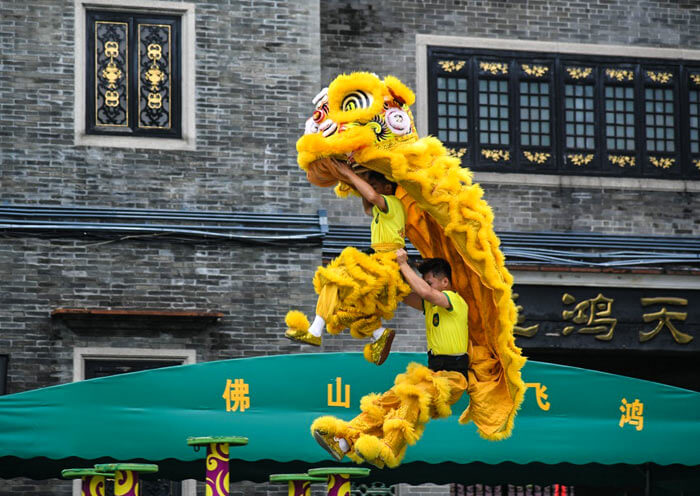
1. Lion Dance Performance (Free outside the Wong Fei-hung Memorial Hall): Performance times are 10:00-10:40, 14:15-14:55, and 15:30-16:10 daily, except on rainy days.
Lion dance performances are a major highlight of the Foshan Ancestral Temple. Blending Chinese martial arts, dance, and drumming, these 35-40 minute performances are presented by professional instructors and students from the Foshan Martial Arts School or by professional lion dance troupes outside the Huang Feihong Memorial Hall. In the hearts of locals, the lion is an auspicious beast, symbolizing good fortune and prosperity. It is an indispensable part of local festivals and important events. Watching the lively lion dance performance allows one to deeply appreciate the charm of Guangdong lion dance culture (Lingnan folk culture). The lions in the lion dance performance come in three colors, corresponding to figures from the Three Kingdoms period: yellow for Liu Bei, red for Guan Yu, and black for Zhang Fei. Red lions are most commonly seen in celebrations, while black lions are often used in martial arts competitions.
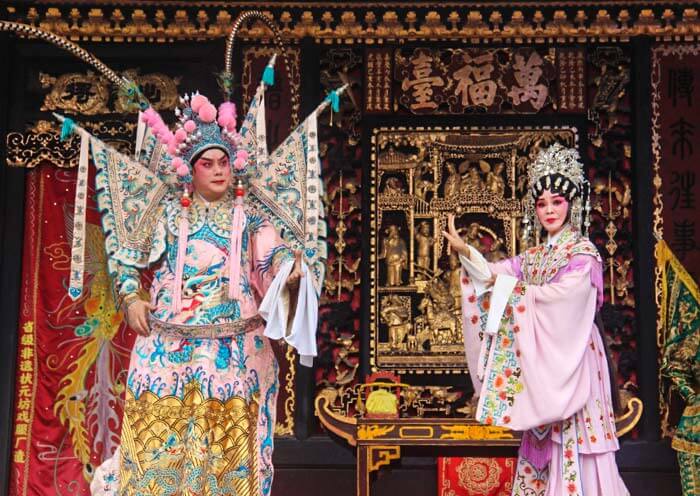
2. Cantonese Opera Performance (Free admission to Wanfu Stage): Performances are held every weekend and on the first and fifteenth days of the lunar calendar from 13:30 to 15:30.
Cantonese opera performances are another highlight of the Ancestral Temple. A treasure of Lingnan culture and a renowned intangible cultural heritage of China, Cantonese opera performances can be enjoyed at Wanfu Stage (built during the Shunzhi period of the Qing Dynasty, the oldest opera stage in Lingnan, China) during festivals. The existing architecture retains the style of the Kangxi era, allowing you to immerse yourself in the traditional Chinese Cantonese opera experience. Furthermore, Lingnan architectural elements such as ceramic roof ornaments are often incorporated into Cantonese opera scenes, forming a unique cultural landscape that is truly captivating.
Notice:
1. If you are interested in Chinese Kung Fu courses, please contact us in advance to arrange them for you, as there are many martial arts schools in Foshan (such as Wing Chun schools).
2. If you are interested in Cantonese opera and would like to visit the Guangdong Cantonese Opera Museum (free admission, closed every Monday, open from 9:00 to 16:30), please contact us in advance so that we can arrange it for you if time permits.
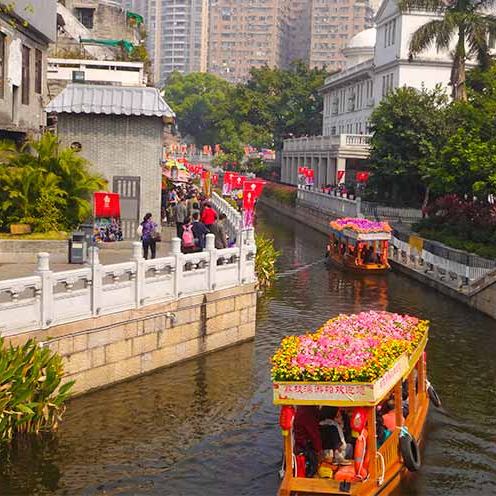
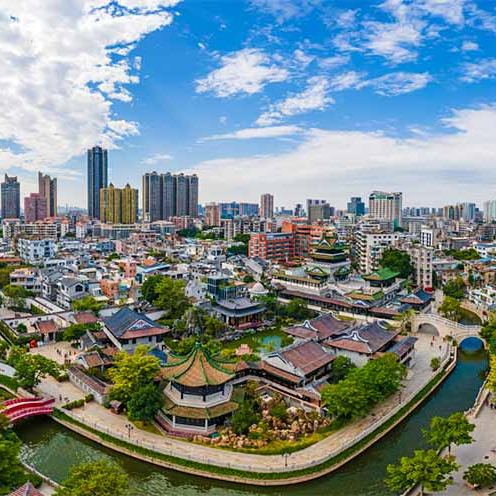
Next, visit Liang Garden , known as the "Number One Garden in Lingnan." Liang Garden is one of the four major gardens in Lingnan, famous for its three treasures: water features, unique rocks, and calligraphy. Here, you can admire the exquisite Lingnan-style residential architecture, experience the atmosphere of Qing Dynasty literati gatherings, closely observe the calligraphy and paintings of various masters, and visit famous attractions such as the Twelve Stone Studio (famous for its twelve yellow wax stone bonsai ) and the uniquely shaped Fenjiang Thatched Cottage , fully immersing yourself in the charm of Qing Dynasty literati gardens.
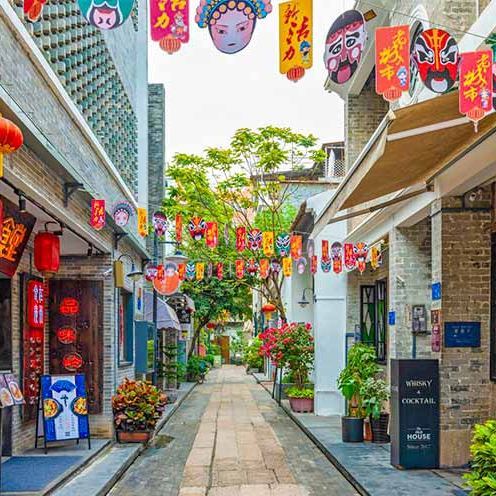
As evening falls, take a leisurely stroll to Lingnan Tiandi. Lingnan Tiandi was once one of the four major commercial centers of Foshan during the Qing Dynasty, and is known as "Lingnan's First Street" and "Foshan's First Street." Here, you can admire 22 Lingnan cultural relics and historical sites, including Cantonese arcade buildings , wok-shaped eaves walls , and ceramic tile roofs ; learn about Lingnan intangible cultural heritage and wedding customs; check out unique cultural and creative products; and savor authentic local cuisine.


Meals: Breakfast and lunch included
Accommodation: Kaiping
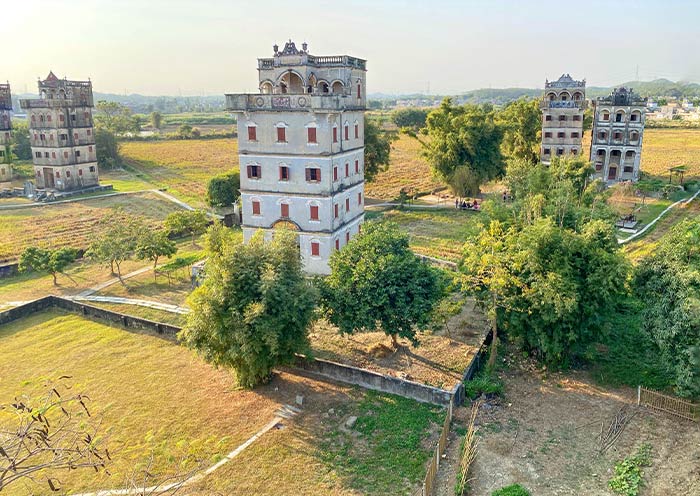
This morning, you will travel 120 kilometers (approximately 2 hours) from Foshan to Kaiping County , Jiangmen City. Jiangmen is known as the "Capital of Overseas Chinese" and "China's No. 1 Hometown of Overseas Chinese," and has been the filming location for many popular Chinese films and television series, including "Let the Bullets Fly," "The Grandmaster," and "The Storm." Kaiping is famous for its Diaolou (watchtowers) and villages, which are currently the only World Cultural Heritage site in Guangdong Province and China's first World Heritage site for overseas Chinese culture. It is known as the "Hometown of Diaolou," with 1,833 existing Diaolou that blend diverse architectural styles from ancient Greece, ancient Rome, and Islam. At its peak, there were more than 3,000 Diaolou.
The reasons for the popularity of Kaiping Diaolou (watchtowers): Kaiping is located at the junction of four counties, with a low-lying terrain and dense river network. Historically, floods and bandits coexisted. Diaolou served multiple functions, including flood prevention (multi-story buildings to avoid water disasters), bandit prevention (thick walls, narrow windows, and shooting holes), and residence. In addition, the influx of remittances from overseas Chinese exacerbated the bandit plunder, which led to the popularity of Diaolou.
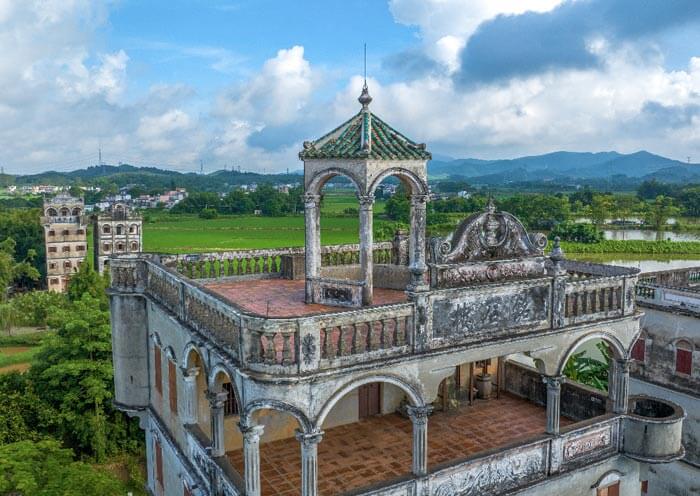
Introduction to Kaiping Diaolou Architecture: Diaolou are mainly divided into three types: watchtowers (early warning), public buildings (for villagers to take refuge collectively), and residential buildings (for families to live in for a long time). Early Diaolou, such as Yinglonglou , were built in the Ming Dynasty and were mainly made of rammed earth. After the Republic of China, due to the investment of returned overseas Chinese, Diaolou gradually incorporated more Western building materials and elements, such as ancient Greek colonnades, ancient Roman arches, Gothic pointed arches, and Baroque patterns, which blended Chinese and Western architectural styles. This was very rare and advanced at the time and was recognized as an "architectural wonder unique in the world".
Upon arrival in Kaiping, you will visit the most representative attractions among the Kaiping Diaolou: Zili Village and Liyuan Garden , to gain a deeper understanding of what Diaolou are and the stories behind them.
1. Zili Village
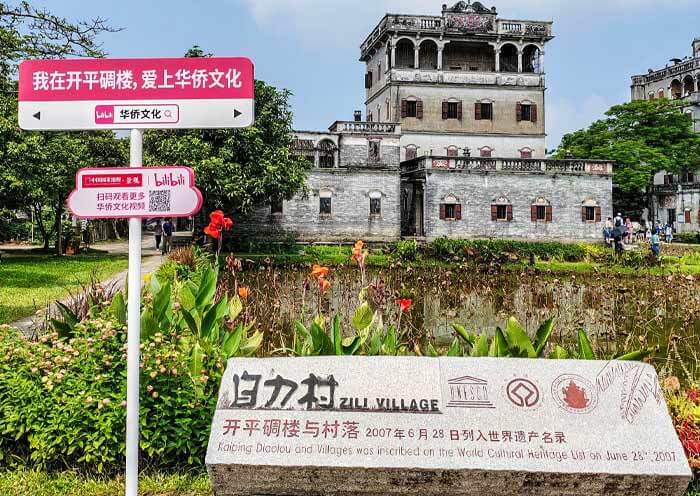
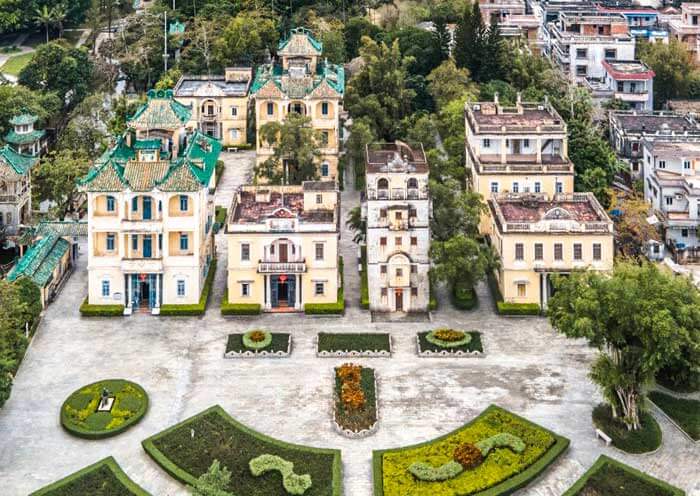
Zili Village is one of the ten most beautiful ancient villages in Guangdong and one of the 50 places in China most worth visiting for foreigners. Known as the "Number One Diaolou Village in Kaiping," it boasts 15 diaolou (watchtowers) of varying styles and exquisite designs. Among them, Mingshilou and Yunhuanlou are must-see iconic diaolou buildings. Strolling through them, one can appreciate the authentic overseas Chinese village atmosphere. Mingshilou , built in 1925, was a filming location for the movie "Let the Bullets Fly" and is the most beautiful diaolou in Zili Village. From its top floor, one can overlook the pastoral scenery and the diaolou cluster, creating a picturesque view. Yunhuanlou is the most elegant diaolou in Kaiping, small and exquisite, and possesses the longest couplet among Kaiping diaolou. Furthermore, it's worth mentioning that the diaolou cluster is surrounded by rice paddies and lotus ponds that change with the seasons. The summer rice waves and autumn harvest scenes are particularly spectacular, offering opportunities to capture the enchanting view of "diaolou reflecting the rice waves."
2. Liyuan Garden
Li Garden, renowned as "a unique garden among overseas Chinese" and "the Chinese version of Downton Abbey," was built by Xie Weili, an overseas Chinese from the United States, over a period of ten years from 1926 to 1936. The name of the garden means "to establish oneself and cultivate talents." Its architecture blends traditional Lingnan gardening, Western architecture (such as arched windows and carved railings), and elements of the Jiangnan water towns. It is divided into three parts: the villa area, the large garden, and the small garden, which are connected by an artificial canal (connecting to the Tanjiang River, which once transported building materials) and a corridor. Strolling through the garden, visitors can see iconic buildings such as Panli Building , Yupei Villa (built to commemorate the second wife, Tan Yuying), the Fire Tower , and Letian Building (the only watchtower in the garden), immersing themselves in the life of the Xie family and learning about the history of the Xie family of overseas Chinese.
Photography tips for Kaiping Diaolou and Villages:
1. March to April is the best time to photograph the watchtowers and vast fields of golden rapeseed flowers, as the light and colors are richer in the early morning and evening.
2. June to August is the best time to photograph the lotus flowers in the pond and the reflection of the watchtower, but it should be noted that high temperatures may affect the flowering period;
3. October to November is a good time to photograph the golden rice fields and watchtowers, especially before the late rice harvest when the scenery is at its best;
4. The rice paddies surrounding Zili Village offer unique scenery in spring, summer, autumn, and winter, making each season breathtaking.


Meals: Breakfast and lunch included
Accommodation: Shenzhen
This morning, you will travel from Kaiping to Shenzhen (approximately 2 hours by high-speed rail or 2-2.5 hours by chartered car). Shenzhen is adjacent to Hong Kong and is China's first special economic zone and one of its most dynamic megacities. It is also one of the world's renowned modern international metropolises and a UNESCO-certified "City of Design".
Upon arrival in Shenzhen, you will visit the Shenzhen Museum , known as "China's most modern museum," to gain a deeper understanding of Shenzhen's history, culture, and development. Strolling through the museum, you can visit the History and Folk Customs Hall to learn about Shenzhen's ancient and modern history, folk culture, and the reform and opening-up process. Historical sites such as Nantou Ancient City and Dapeng Fortress, as well as the animated wax figures recreating scenes of Cantonese/Hakka life, are highlights worth exploring. If you are interested, you can also visit the Shenzhen Reform and Opening-up Exhibition Hall to witness firsthand the dramatic transformation of Shenzhen from an unassuming fishing village into the bustling international metropolis it is today.
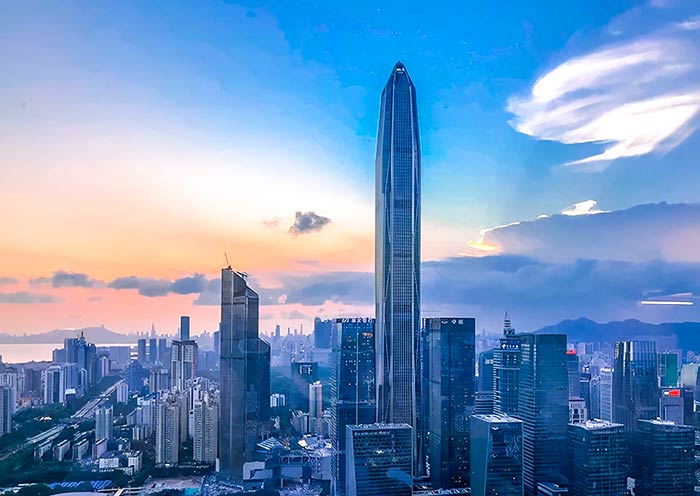
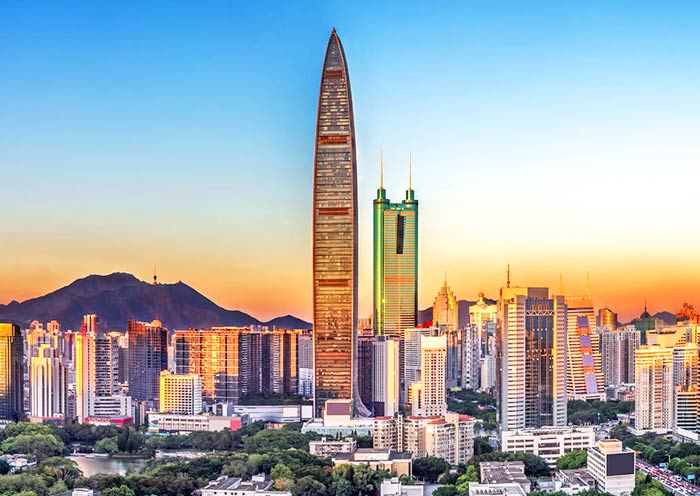
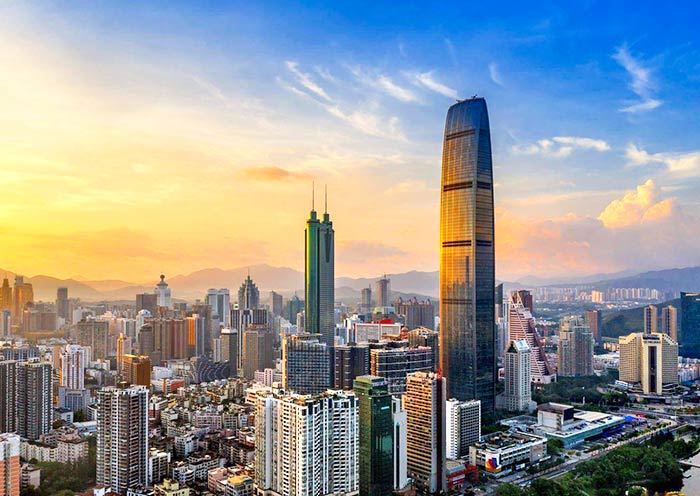
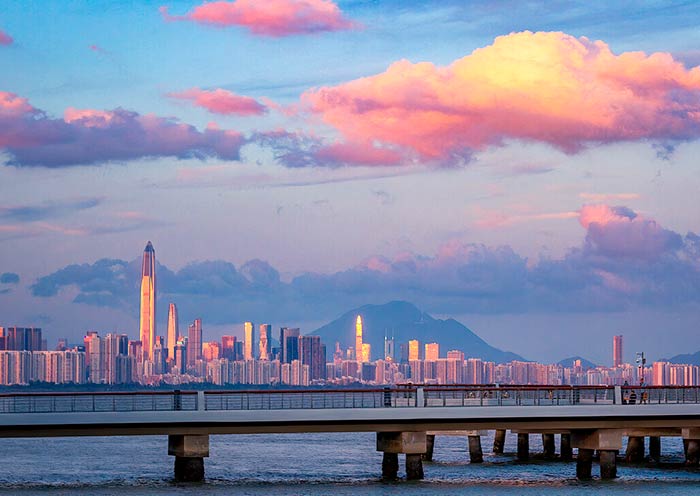
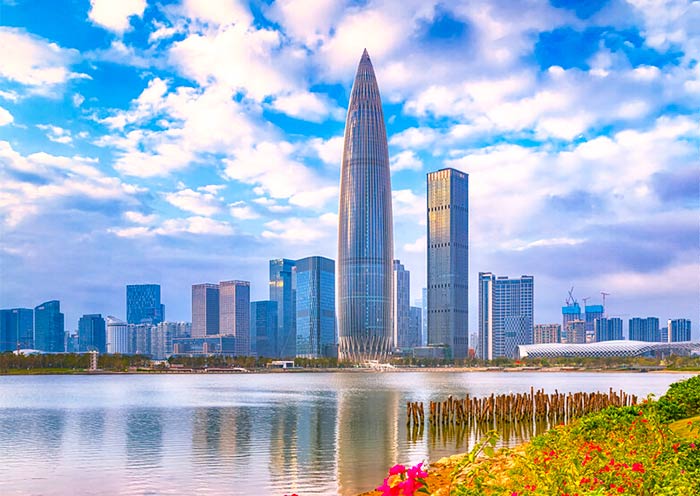
Then, leisurely stroll through the heart of Shenzhen, admiring the magnificent skyscrapers and enjoying the captivating scenery of "China's Silicon Valley." Among them, the Ping An International Finance Center (approximately 599 meters tall, Shenzhen's tallest building, China's second tallest, and the world's fourth tallest), KK100 (approximately 442 meters tall, formerly Shenzhen's tallest building, now Shenzhen's second tallest), and Diwang Building (approximately 384 meters tall, China's first supertall building, and at the time of its completion, Asia's tallest building) are three famous landmarks in Shenzhen, representing milestones in the city's development at different stages. They are breathtaking whether viewed up close or from afar. If you are interested, you can ascend the Ping An International Finance Center and take one of China's fastest sightseeing elevators to the 116th-floor observation deck for a 360° panoramic view of Shenzhen. On a clear day, you may even have the opportunity to see stunning views of Hong Kong in the distance.
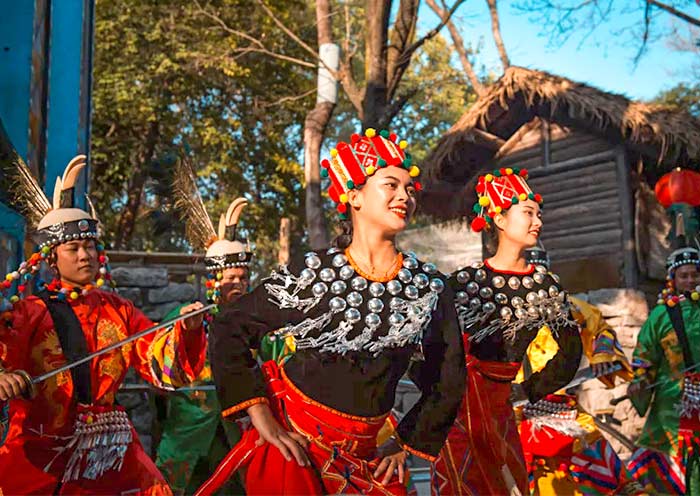
In the afternoon, visit the Splendid China Folk Village , a place where you can "step into history and tour all of China in a day." This is China's first and once the world's largest miniature landscape theme park, and a famous local landmark. It allows you to easily explore 5,000 years of Chinese history and culture, as well as unique ethnic customs, in a short time. Stroll through the village and immerse yourself in 82 1:15 scale miniature replicas of famous attractions, such as the Great Wall , the Forbidden City , the Terracotta Army , and the Potala Palace ; over 50,000 ceramic figurines depicting scenes of ancient Chinese daily life; 27 original Chinese village buildings and the cultural customs of 56 ethnic groups, such as Dai bamboo houses, Mongolian yurts, Tibetan watchtowers, Miao stilted houses, the Wa people's "Hair-Swinging Dance," and the Hani people's "Terraced Field Song." Experience the diverse charm of Chinese culture amidst melodious songs and beautiful dances.
After experiencing the captivating cultural atmosphere, head to Shenzhen Bay Park , known as the "Window to the Blue Ocean." This iconic seaside resort in Shenzhen serves as an ecological corridor connecting Shenzhen and Hong Kong. You can leisurely stroll through the park, admiring the magnificent ocean views and the long coastline, or find a quiet corner to relax. Not only can you unwind, but you can also enjoy panoramic views of Hong Kong's stunning skyline and the breathtaking cityscapes of both Shenzhen and Hong Kong. Weather permitting, you might even capture a breathtaking sunrise or sunset.
After the tour, our driver will escort you to your hotel in Shenzhen for check-in and rest.


Meals: Breakfast included
Accommodation: /
Today marks the end of our wonderful and unforgettable 6-day trip to Guangzhou, Foshan, Kaiping, and Shenzhen. After you have finished packing, our driver will take you to the airport/train station for your next destination.
Thank you for choosing Huangjia International Travel Agency. We are happy to provide you with high-quality travel services for your trip to Guangdong. We look forward to serving you again on your future trip to China and embarking on new and exciting journeys together.

1. Based on your travel needs, you can specify the accommodation standard for your itinerary, such as 3- to 5-star hotels.
2. Travel prices may fluctuate depending on travel dates, group size, hotel class, and other factors.
Included in the fee
Tour guide: Chinese/English speaking tour guide provided throughout the trip.
Entrance fees: First entrance fees to the attractions listed in the itinerary
Transportation: Vehicle type will be arranged according to the number of participants, ensuring one seat per person.
Accommodation: Hotels listed in the itinerary (star rating optional)
Meals: Meals as listed in the itinerary (breakfast included at the hotel)
Service: Our service begins with your initial consultation and continues until the end of your trip, providing you with personalized one-on-one support throughout.
The fee does not include
Documents: Visa
Activities: Optional activities and special attractions recommended in the itinerary.
Hotel: Personal expenses within the hotel such as laundry, hairdressing, telephone, fax, pay TV, drinks, and tobacco.
Other: Additional costs incurred due to force majeure events such as traffic delays, strikes, weather, aircraft or mechanical failures, flight cancellations or schedule changes, and any costs not mentioned in the inclusions.
Travel Tips
1. Tourists to Guangdong can enjoy a 240-hour visa-free transit policy.
Guangdong has implemented a 240-hour visa-free transit policy for travelers from 54 countries. Travelers can enter the country for a stay of 240 hours (10 days) without a visa by holding a valid international travel document or a connecting ticket (airplane ticket, ship ticket, train ticket) to a third country/region.
These 54 countries are:
Six Asian countries: Singapore, Japan, South Korea, Brunei, the United Arab Emirates, and Qatar;
Six countries in the Americas: the United States, Canada, Brazil, Mexico, Argentina, and Chile;
Two Oceania countries: Australia and New Zealand;
Fifteen other European countries: United Kingdom, Russia, Ireland, Cyprus, Bulgaria, Romania, Ukraine, Serbia, Croatia, Bosnia and Herzegovina, Montenegro, Macedonia, Albania, Monaco, and Belarus;
The 25 European Schengen Visa Agreement countries are: Germany, France, Italy, Spain, Netherlands, Switzerland, Sweden, Belgium, Austria, Finland, Czech Republic, Denmark, Estonia, Greece, Hungary, Iceland, Latvia, Lithuania, Luxembourg, Malta, Poland, Portugal, Slovakia, Slovenia, and Norway.
2. The itinerary can be customized to your needs.
If you have better suggestions for the above itinerary or other travel ideas, please feel free to contact us. Our professional travel consultants will customize a Fujian travel itinerary that best suits your needs and budget.
3. Extend this trip to China
If you have ample time and plan to visit other tourist destinations in China, you can also contact us to plan other itineraries within China, such as Shanghai, Hangzhou, Suzhou, Guangzhou, Shenzhen, Hong Kong, Macau, Beijing, Xi'an, Zhangjiajie, Yunnan, Harbin, Tibet, Xinjiang, etc. Simply tell us your preferred destinations and attractions, and our professional travel experts will plan the most suitable itinerary for you at the best price.
Why choose us?
More favorable fees
Enjoy the best deals on transportation, accommodation, tickets, and tour packages.
Early bird bookings also come with huge discounts.
Exclusive travel consultant
Experienced travel consultants provide you with professional travel services 24/7.
One-stop support for ticket bookings and problem solving - a proven track record of excellence over the past decade.
Over 90% of regular and repeat customers choose to travel with us again.
The best travel experience
Experience the true local landscape, culture, and cuisine.
Enjoy a high-quality trip with no shopping stops, explore and discover the true joy of travel.
More professional services
Experienced drivers and guides ensure your safety and enjoyment during your trip.
Our comprehensive customized packages cater to your needs across all levels of travel.
A comprehensive and thoughtful refund and cancellation service helps you prevent and reduce travel risks.