Photographing Southern Fujian | 7-Day Tour of Xiamen Gulangyu Island, Fujian Hakka Tulou, and Xiapu Mudflats
Accommodation: Xiamen City
Hello, welcome to Xiamen , a famous coastal city in Fujian Province, China, where mountains and sea meet and Chinese and Western cultures blend . Our driver will meet you at the airport/train station exit and take you to our carefully selected hotel for check-in.
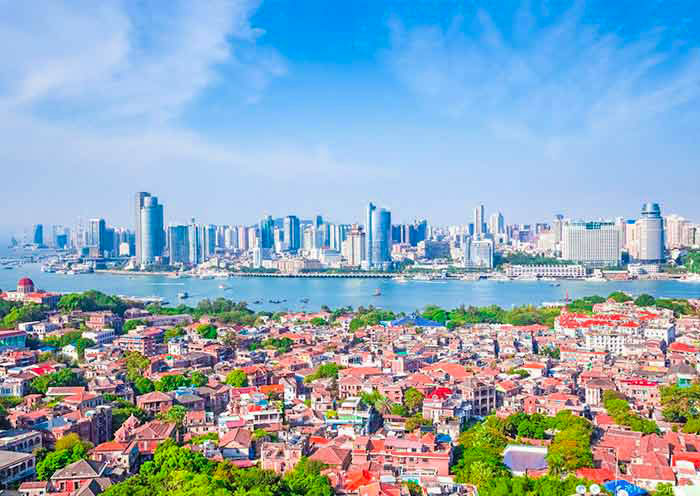
After a short rest, you will be transferred to the port for a 20-minute ferry ride to Gulangyu Island. Gulangyu is one of the most beautiful islands in Xiamen, Fujian Province. In 2017, it was listed as a "Historic International Settlement" and is one of the must-see destinations for tourists visiting Fujian. The island boasts 931 historical buildings with a blend of Chinese and Western architectural styles, including Gothic churches, Baroque consulates, and traditional Minnan red-brick houses, earning it the nickname "World Architecture Expo." Furthermore, the island has the highest per capita piano ownership rate in China and is home to China's first piano museum and the world's largest organ museum. It has also nurtured numerous renowned musicians both domestically and internationally, earning it the titles of "Island of Music" and "Island of Pianos." In addition, the island prohibits motor vehicles, adding to its tranquil atmosphere. You can leisurely stroll and enjoy the picturesque island scenery, fully appreciating the elegant charm of this "Garden on the Sea."
Today's tour of Gulangyu Island offers a cultural and historical architecture tour (approximately 4 to 5 hours) : taking you to visit old buildings of different styles and learn about the historical stories behind them.
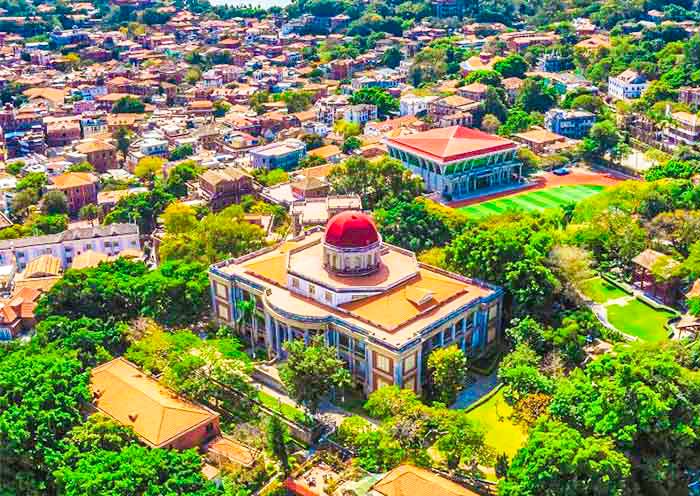
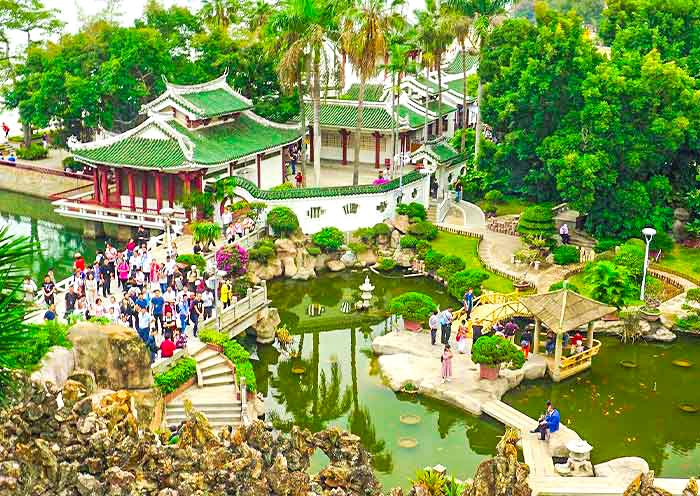
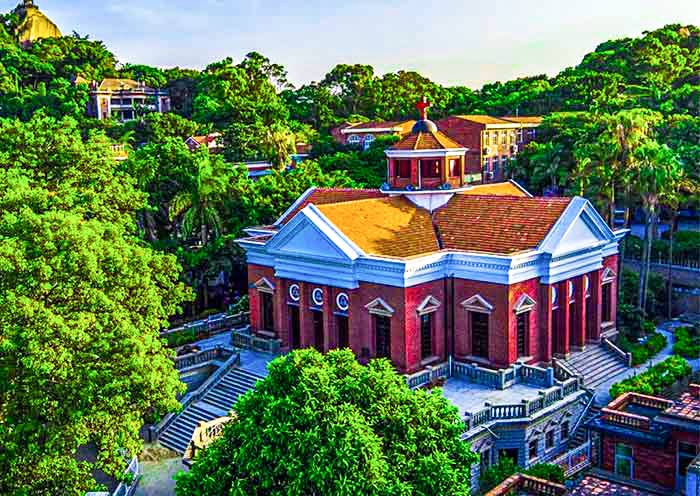
Stops along the way: Sanqiutian Wharf (one of the earliest wharves on Gulangyu Island) → Boat House (Gulangyu's only villa designed in the shape of a ship, and a rare boat-shaped villa in the world) → Bagua Building (China's only and the world's largest pipe organ museum, its architecture blends ancient Greek, ancient Roman, Islamic, and Minnan styles. Known as the "Little White House of Gulangyu" for its red dome and magnificent appearance, it is Gulangyu's most prominent landmark) → Yang Family Garden (one of Gulangyu's ten famous villa complexes, hailed as "Gulangyu's Versailles") → Fanpo Building (built by Xu Jingquan, a Filipino-Chinese, its architecture blends Rococo style and Minnan craftsmanship, with vibrant colors) → Trinity Church (Gulangyu's earliest and largest Christian chapel, its architecture employs a rare Greek cross symmetrical design) → Golden Gourd Building (also known as Huang Cimin Villa, one of Gulangyu's ten villas and one of Gulangyu's most representative historical building complexes, characterized by its Byzantine-style "gourd" dome and... Known for its blend of Chinese and Western design → Dafudi (one of the oldest existing residential buildings on Gulangyu, a typical traditional Minnan red brick house) → Siluo Dacuo (a representative building of traditional Minnan red brick houses, the oldest existing residential building complex on Gulangyu) → Chujia Garden (one of the best-preserved overseas Chinese villas on Gulangyu) → Huangjia Garden (the largest and most luxurious private residence on Gulangyu, known as "China's No. 1 Villa", where many national dignitaries have stayed) → Shuzhuang Garden (known as "the No. 1 mansion on the sea", its design of "hiding the sea and supplementing the mountain" is very rare, and the piano museum in the garden has a collection of many piano treasures) → Haitang Gou (one of the top ten villas on Gulangyu, a model of Chinese roofs overshadowing Western styles, where you can watch Nanyin performances) → Huang Rongyuan Hall (the most romantic and exquisite villa on Gulangyu, and also China's first national-level record museum) → Catholic Church (the most beautiful church on Gulangyu, and also the only remaining Gothic church in Xiamen) → Return to the pier .
Tip: Since there will be a lot of walking involved, we recommend wearing comfortable shoes for a better experience.


Meals: Lunch included
Accommodation: Nanjing County
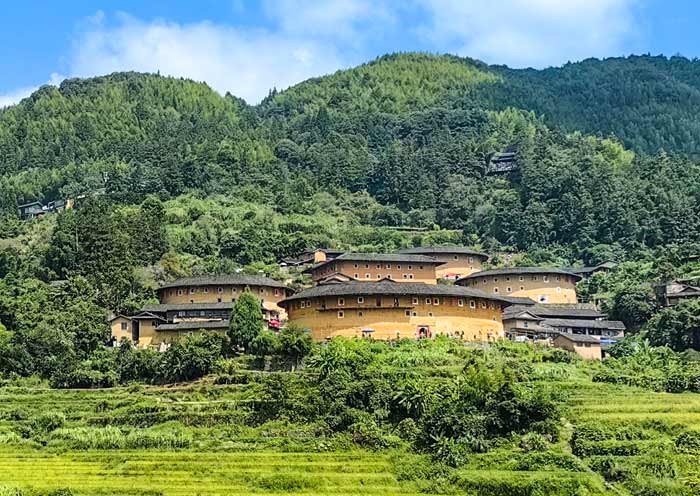
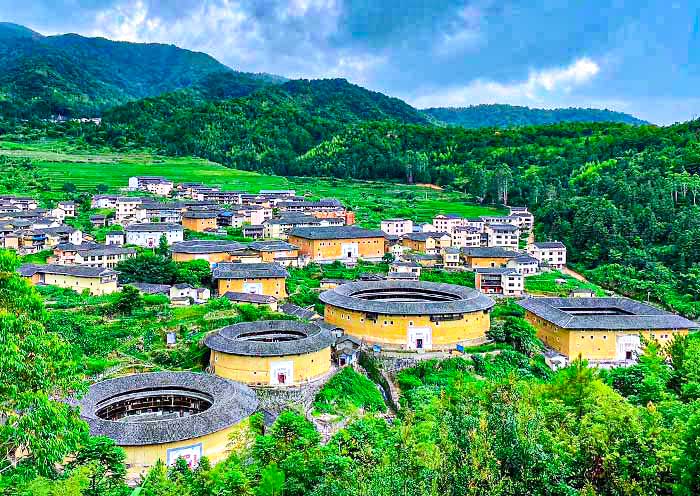
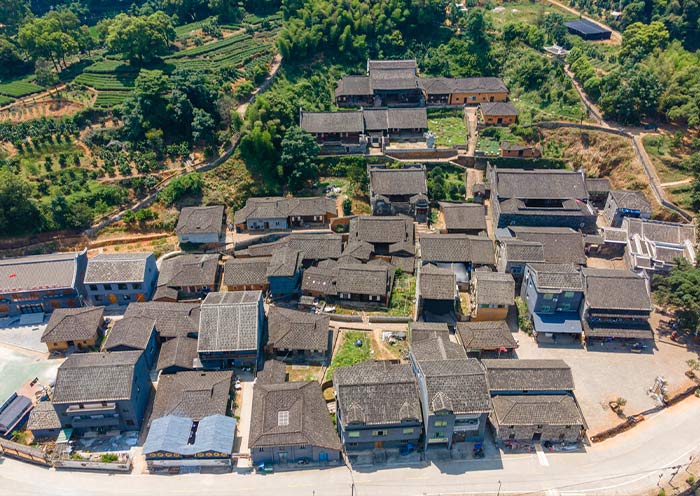
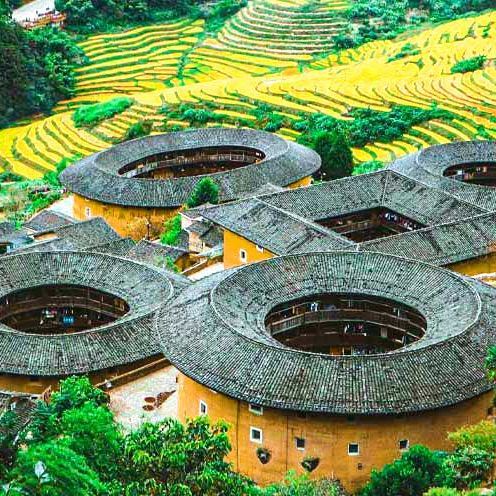
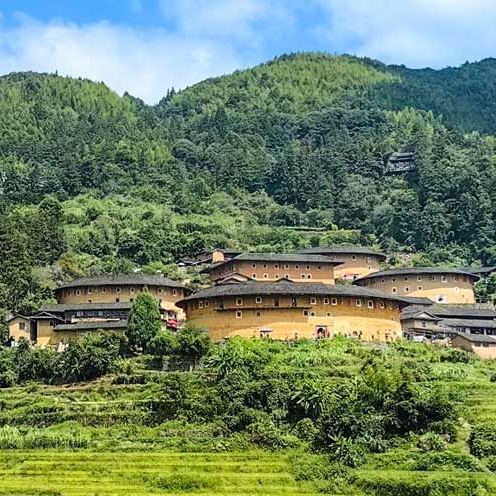
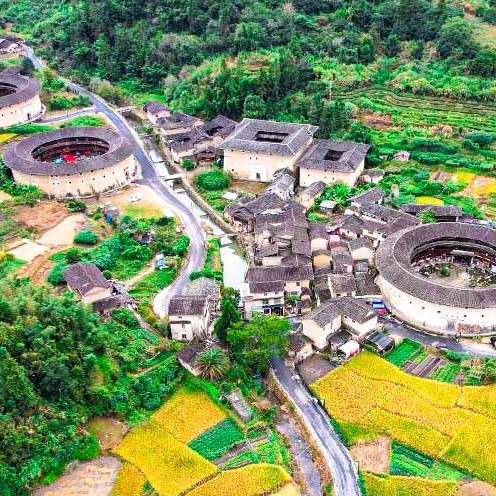
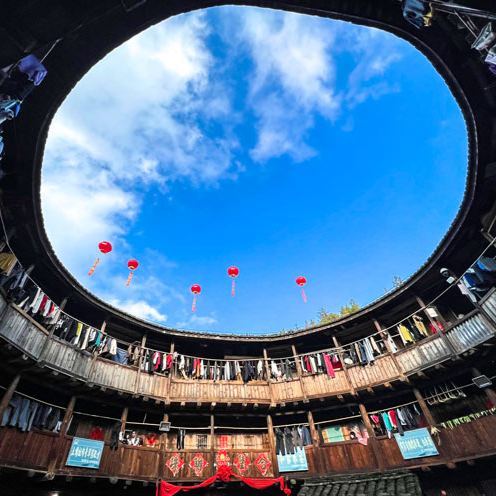
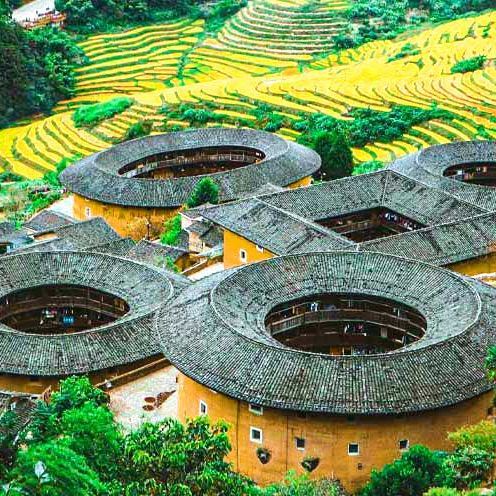
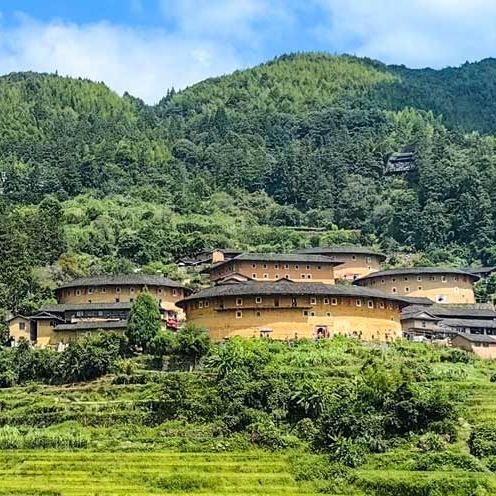
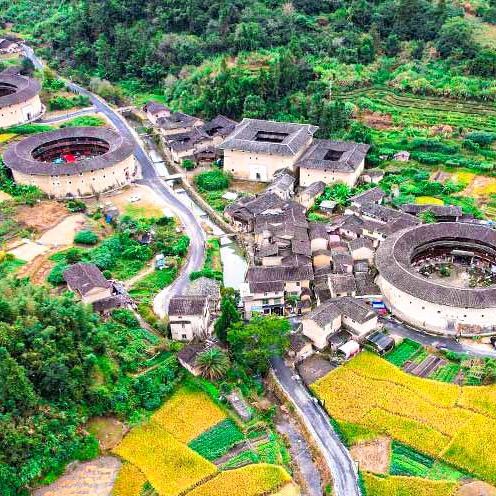
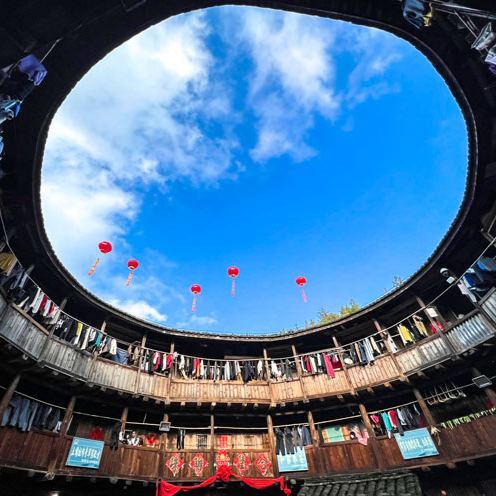
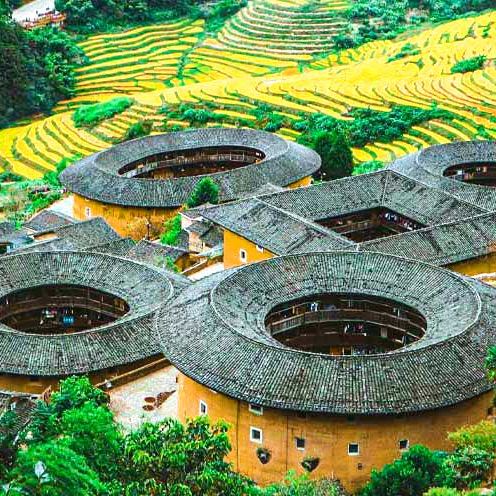
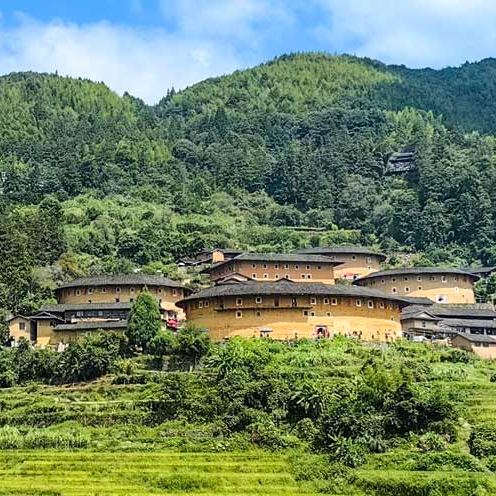
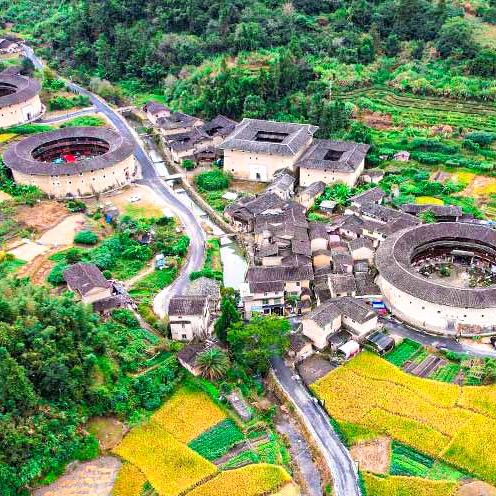
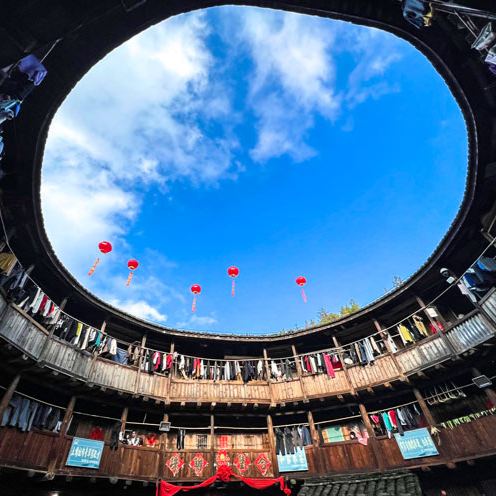
This morning, you will depart from Xiamen City and travel approximately 150 kilometers (about 2.5 hours) to visit the Tulou in Nanjing . There are over 15,000 existing Tulou buildings in Nanjing, representing the typical Hakka Tulou of Fujian and a gem of Chinese vernacular architecture, often described as "unique mountain village dwellings in the world." Among them, the Tianluokeng Tulou Cluster, Hekeng Tulou Cluster, Huaiyuanlou, and Heguilou were inscribed on the World Heritage List in 2008.
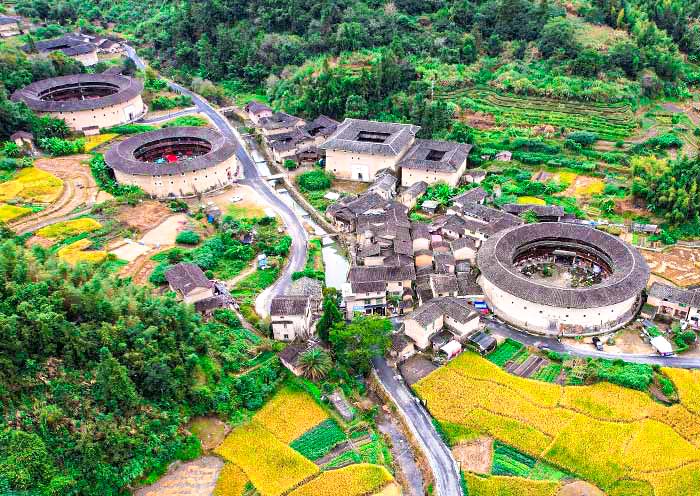
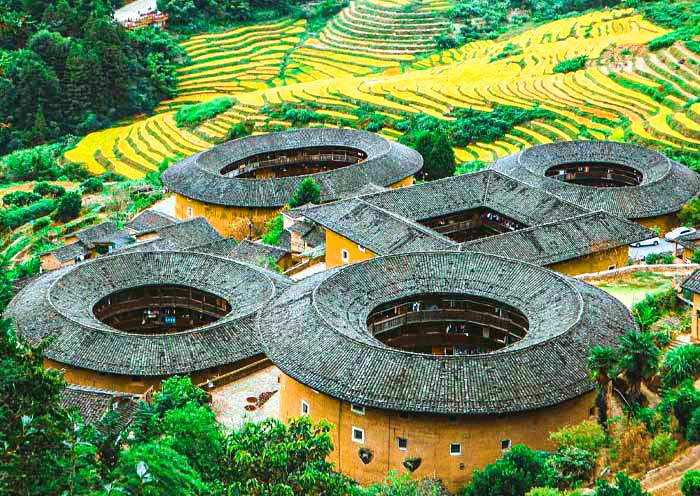
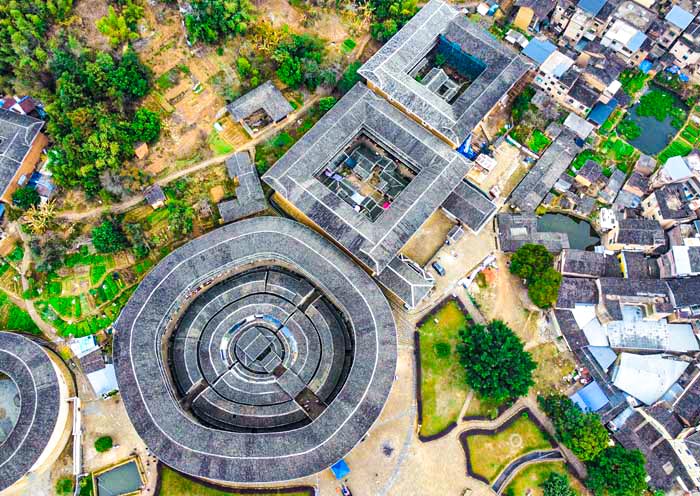
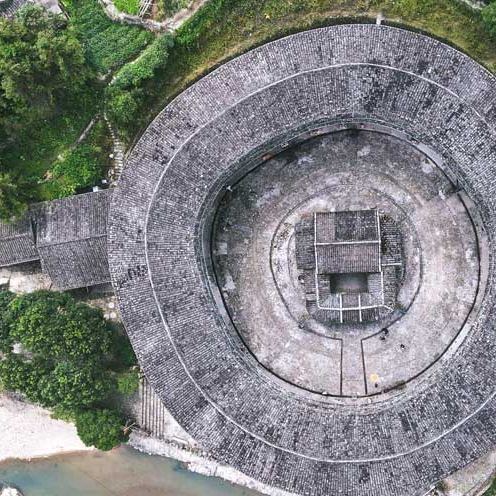
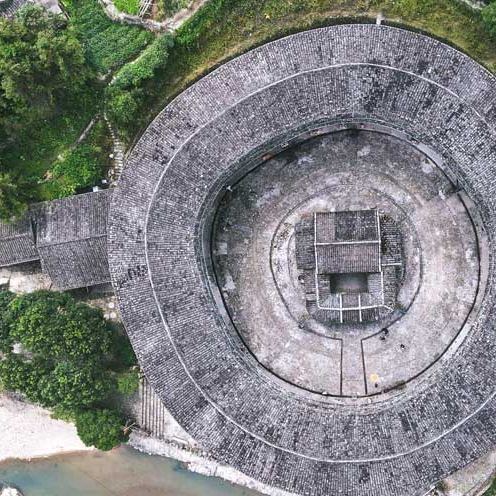
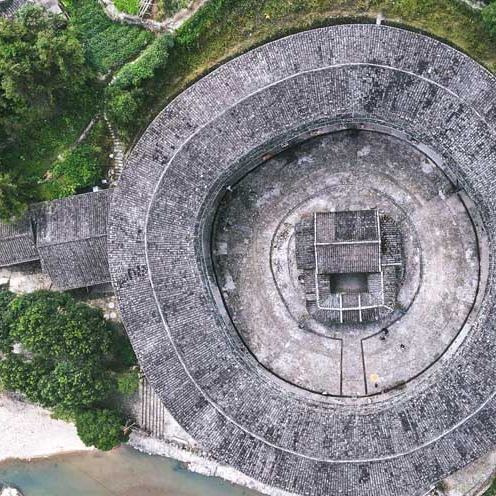
Upon arrival, we will first visit the Tianluokeng Tulou Cluster . Built in 1662, the Tianluokeng Tulou Cluster is a settlement of the Huang family Hakka people. It is famous for its unique layout, which resembles "four dishes and one soup". It is the most recognizable Tulou landscape in Fujian. It consists of one square building ( Buyunlou ), three round buildings ( Hechanglou , Zhenchanglou , and Ruiyunlou ) and one oval building ( Wenchanglou ). These five Tulou follow the layout of the five elements (metal, wood, water, fire, and earth) and are known as "a wonder of world architecture" and "an outstanding representative of Chinese Feng Shui architecture".
Recommended tour route: Upper viewing platform (overlooking the panoramic view of the "Four Dishes and One Soup" tulou, resembling "plum blossoms in bloom" or "flying saucer landing") → Buyunlou (symbolizing "rising to prominence," offering a panoramic view of Hakka life) → Hechanglou/Zhenchanglou/Ruiyunlou (perfect for capturing the courtyard view similar to that in the movie "Big Fish & Begonia") → Wenchanglou (the only oval-shaped tulou in Nanjing, symbolizing "prosperous literary fortune," offering beautiful views of the tulou and terraced fields) → Lower viewing platform (looking up at the tulou cluster and terraced fields, resembling the "Potala Palace")
Lunch will feature delicious Hakka cuisine , allowing you to experience the local Hakka lifestyle. If you're interested, you can also try the fragrant Hakka rice wine.
After lunch, we'll head to Xiaban (Ban) Village , nestled amidst flowing streams and terraced fields . Twelve ancient earthen buildings are scattered along the banks of the stream, with Yuchang Building being our highlight. Built in the late Yuan and early Ming dynasties (approximately 1308-1368), Yuchang Building is one of the oldest existing round earthen buildings in China, hailed as the "Father of Fujian Tulou." Its unique "leaning east and west" structure, with the 3rd and 4th floors leaning 15° clockwise and the 5th floor leaning counter-clockwise, has withstood over 700 years of wind and rain, earning it the title of "China's First Wonder Building." You can stroll and admire this architectural marvel, observe the daily life of the Hakka people living in the earthen buildings up close, or chat with the Hakka residents to learn more about the fascinating stories and unique folk culture of the earthen buildings. Also, remember to sample a cup of locally brewed oolong tea , which is exceptionally sweet and delicious.
Afterwards, visit the Hekeng Tulou Cluster, one of the most densely packed World Heritage sites in Fujian province. It is renowned for its unique "Big Dipper" layout and the architectural marvel of interwoven square and round tulou buildings. Among them, Chaoshuilou (built during the Jiajing period of the Ming Dynasty, the oldest square tulou) and Yuxinglou (a modern round tulou) are particularly representative and well worth seeing. Additionally, you can climb the Lion Mountain viewing platform for a panoramic view of the "Big Dipper" and capture stunning travel photos. It's worth noting that the Hekeng Tulou Cluster was also the inspiration and filming location for Mulan's hometown in the Disney live-action film *Mulan*. If interested, you can visit the scenes featured in the movie.
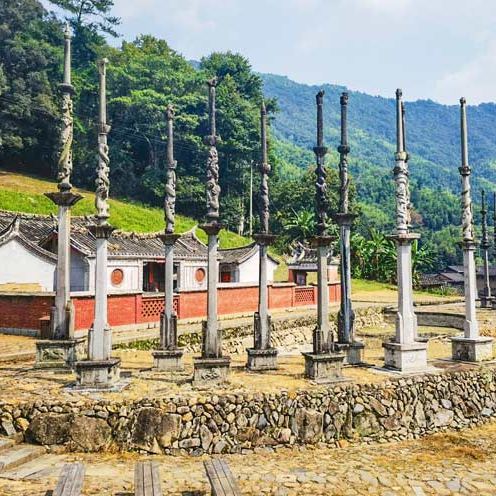
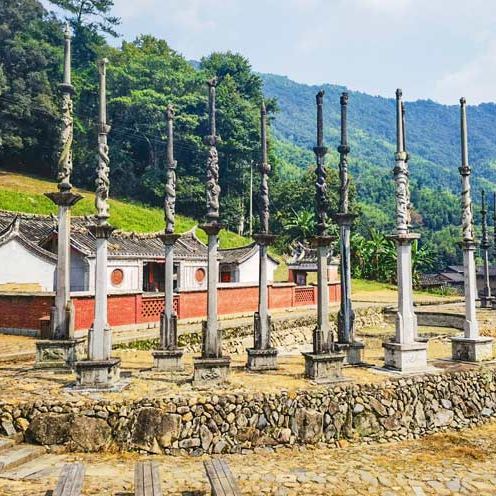
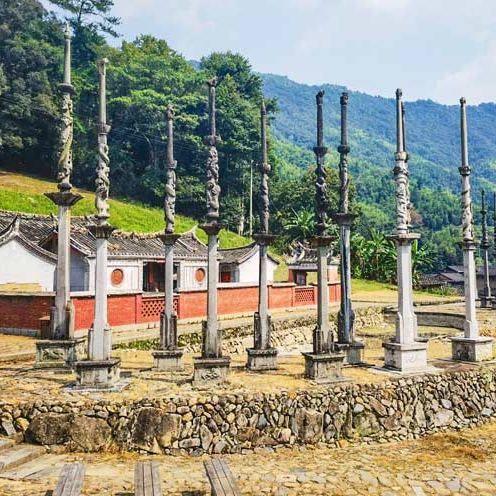
Afterwards, visit the ancient Hakka village of Taxia. Taxia Village is distributed in an "S" shape along a stream, with two round earthen buildings ( Yude Building and Shunchang Building ) on either side of the stream, resembling a Tai Chi symbol, earning it the nickname "Tai Chi Water Village." Coupled with its beautiful mountain and water environment, high-quality air and spring water, and the villagers' healthy lifestyle, it is also known as a "Longevity Village." Furthermore, the village's 11 cement bridges and some earthen buildings were built with donations from overseas Chinese, showcasing its unique overseas Chinese character. You can stroll and admire the picturesque ancient village scenery and the various shapes of the earthen buildings, among which Yude Building (also known as the "Apron Building") and the Deyuantang Zhang Family Temple (the most complete group of 24 stone dragon flagpoles in China) are worth a closer look.
We spent the night in Taxia Village.
Precautions:
1. When visiting the Tianluokeng Tulou Cluster, you can choose to walk or take a sightseeing bus.
2. Hekeng Tulou Cluster: After getting off the bus at the entrance, it takes about 15 minutes to walk to the main tulou buildings.
3. If you visit Taxia Village in autumn, you can see Hakka people drying persimmons outside the Tulou (earthen buildings), and the whole village is filled with the sweet aroma of persimmons.
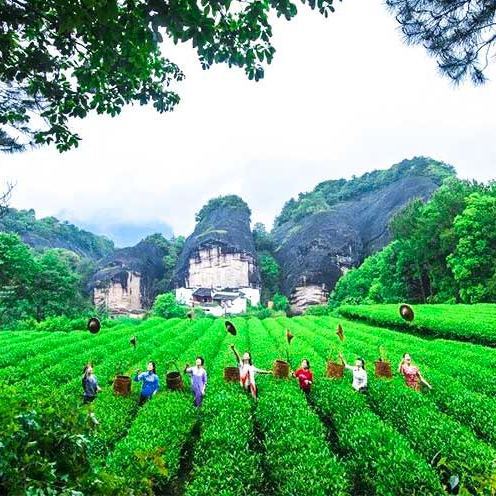
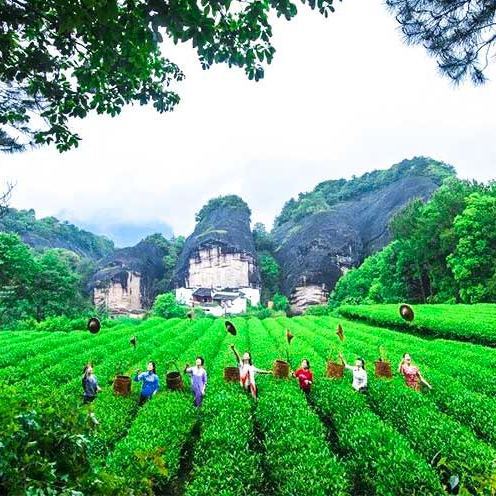
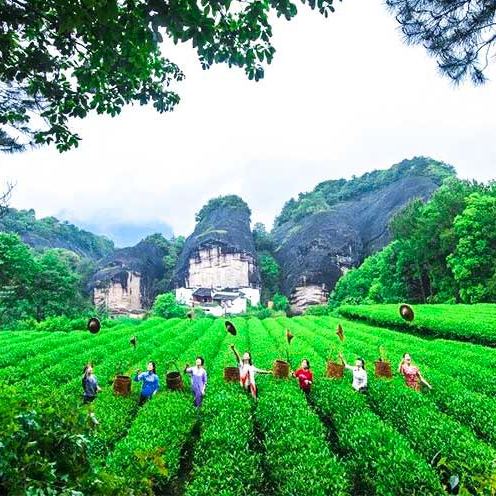
4. If you are interested in oolong tea, you can contact us in advance and we will take you to a local tea garden near Taxia Village to experience tea picking.
5. The Tianluokeng Tulou Cluster and the Chuxi Tulou Cluster are both great places to admire the terraced fields and take beautiful photos.
6. In autumn, you can take advantage of this rare opportunity to pick fresh local fruits and even try your hand at farm work.


Meals: Breakfast and lunch included
Accommodation: Xiamen City
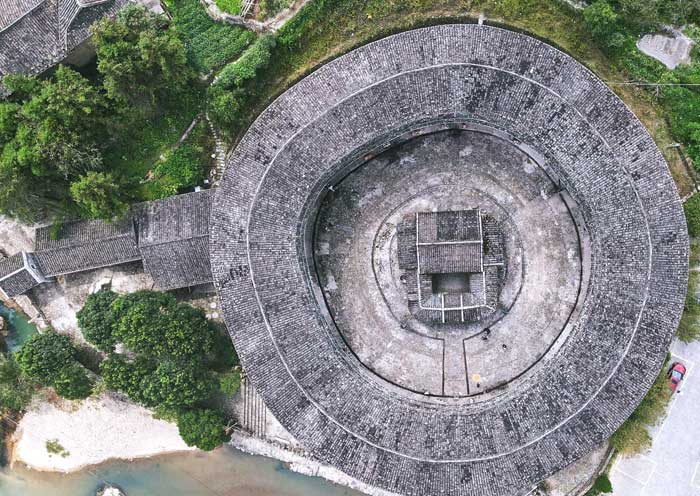
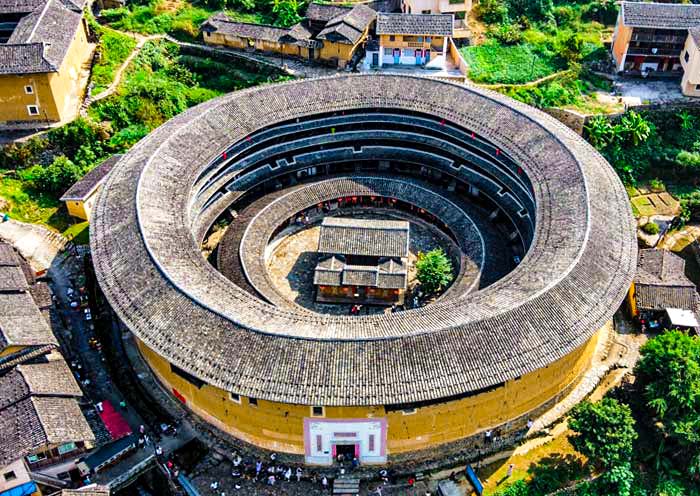
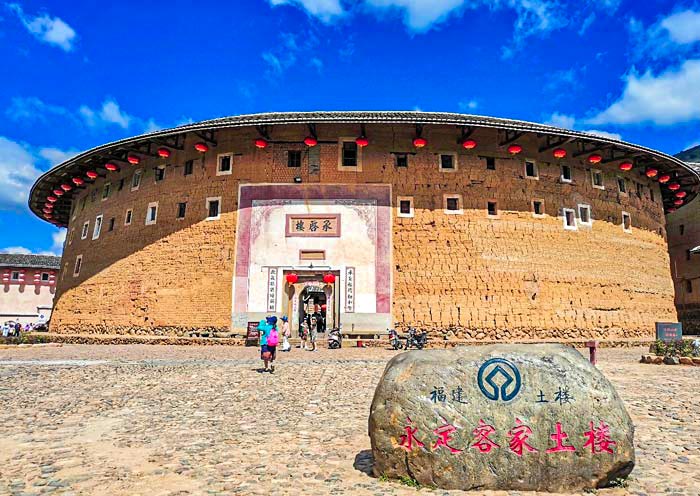
This morning, you will depart from Nanjing Tulou and travel approximately 10 kilometers (about 20 minutes) to Yongding Tulou. Yongding Tulou currently has over 23,000 existing Hakka Tulou buildings, far exceeding the scale and number of Nanjing Tulou, ranking first in Fujian Province. It is the largest and oldest Tulou cluster in China and even the world, known as the "Hometown of Tulou" and the "Pearl of Oriental Architecture." In 2008, it was listed as a World Heritage Site as part of the Fujian Tulou complex. In addition, you will have the opportunity to explore filming locations from the popular Chinese film "Big Fish & Begonia," such as Chengqi Building, the home of Chun .
In the morning, we will first visit the Gaobei Tulou Cluster , known as the "King of Tulou Scenic Area." This is the ancestral home of the Jiang family since the Yuan Dynasty, and it is one of the most representative Tulou clusters in Yongding, Fujian. It is also a living museum of Hakka culture and architectural aesthetics. Among them, Chengqi Building (built during the Chongzhen period of the Ming Dynasty, taking 81 years to complete, with a diameter of 73 meters and containing 400 rooms, known as the "King of Tulou," it has been featured on Chinese folk houses stamps and is the prototype of the "Divine Enclosure" in the movie "Big Fish & Begonia"), Wuyun Building (built during the Yongle period of the Ming Dynasty, it is the oldest existing Tulou of the Jiang family, and because its walls are tilted by 1.5 meters but have stood for a century, it is also known as the "Unbreakable Building"), Shize Building (a square Tulou, a typical Hakka family settlement with the layout of "one gate, two wells, three halls, and four ladders"), and Qiaofu Building (the ancestral hall is a combination of Chinese and Western architectural styles, named "Doctor Building" because 11 members of the family have become PhDs) are the essence of the Gaobei Tulou Cluster and are worth a closer look.
A fantastic spot for photography in the Gaobei Tulou Cluster:
1. The spectacular "square and round sky" formed by the square Shize Building and the round Chengqi Building;
2. Enjoy panoramic views of the rice paddies outside the building; the atmosphere is even better in the early morning or evening.
3. Use the Shize Building entrance to frame the Chengqi Building and capture a geometric aesthetic image of "a circle within a square";
4. The lanterns at Qiaofulou at night are perfect for shooting warm-toned light and shadow.
In the afternoon, we will travel to Chuxi Tulou Cluster in Yongding, Fujian , which is the most original and has the most distinctive Hakka cultural characteristics. Nestled against the mountains and surrounded by terraced fields and streams, it is known as "China's most beautiful Tulou cluster". It has different charms in each season. In March and April, you can enjoy the golden rapeseed flower fields and the charming spring scenery of Tulou. In September and October, you can enjoy the intoxicating autumn harvest scenery. Among them, Jiqinglou (built in 1419, it is one of the oldest existing round buildings in Yongding, constructed entirely of wood with mortise and tenon joints without a single iron nail, and its 72-staircase design is unique), Shanqinglou (built in 1979 by overseas Chinese, its white exterior walls stand out among the Tulou clusters, and it is a rare round building with no buildings within a single ring), Gengqinglou (built in 1849, with a diameter of only 33 meters and a height of 3 stories, its three rammed earth partition walls are a major feature), and Shengqinglou (a square Tulou, composed of two inner and outer square Tulous) are the most representative Tulou buildings in the Chuxi Tulou Cluster, allowing visitors to enjoy the "three rounds and one square" Tulou landscape. In addition, you can also climb the viewing platform to overlook the entire cluster of round, rectangular, square, and hexagonal Tulou surrounded by terraced fields. The best time to take photos is during the morning mist or at sunset, while the view is best when the rice paddies are golden in autumn.
After the tour, we will return to our hotel in Xiamen (about 3 hours away) for rest.


Meals: Breakfast included
Accommodation: Xiapu County
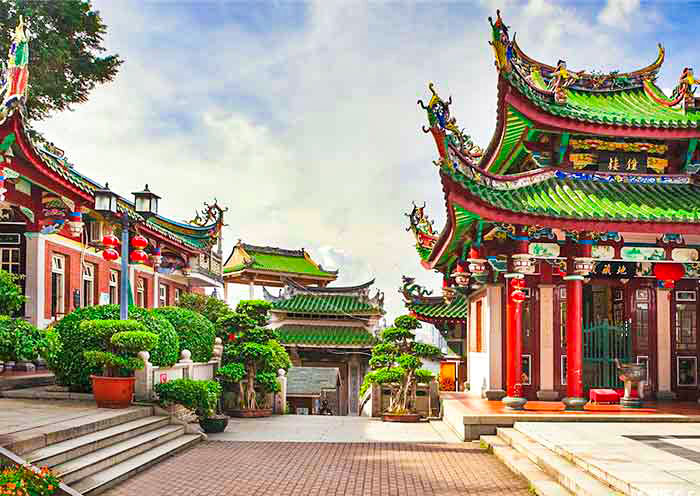
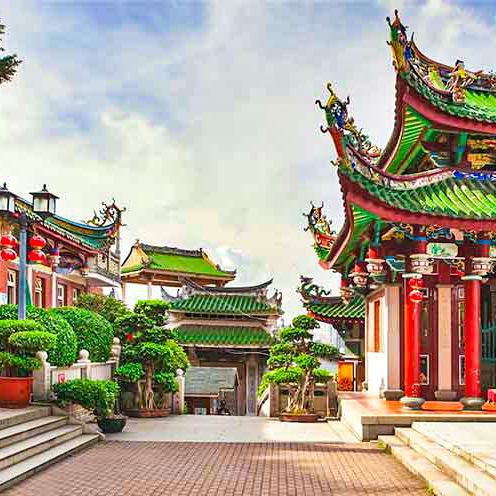
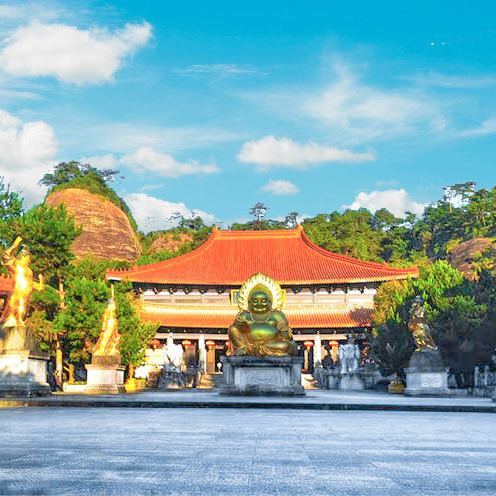
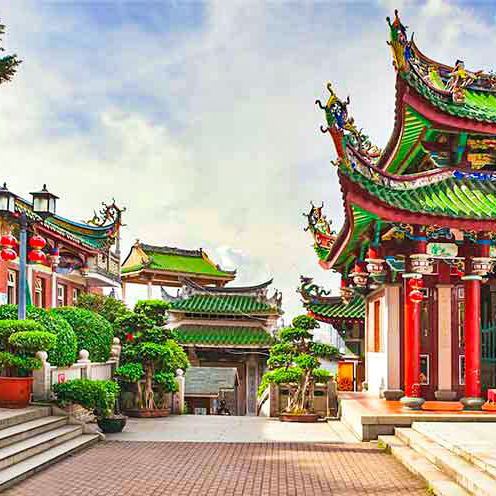
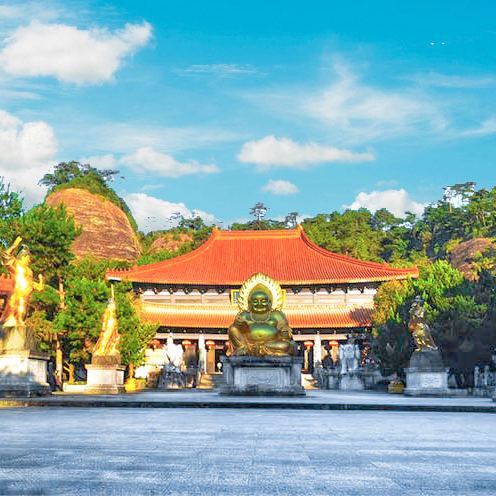
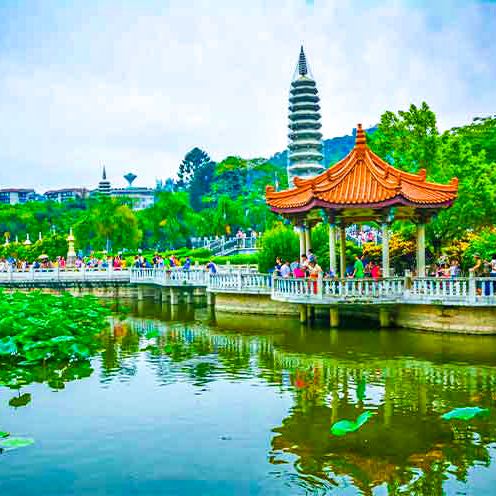
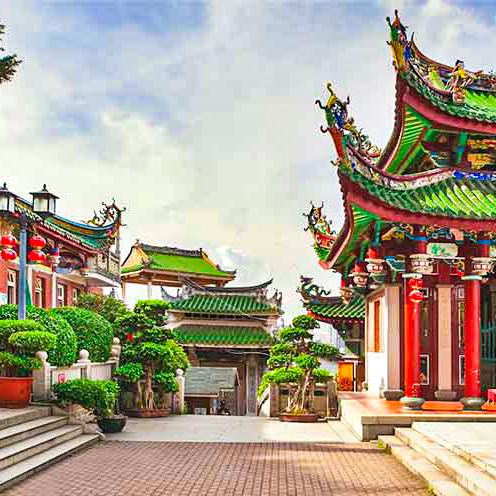
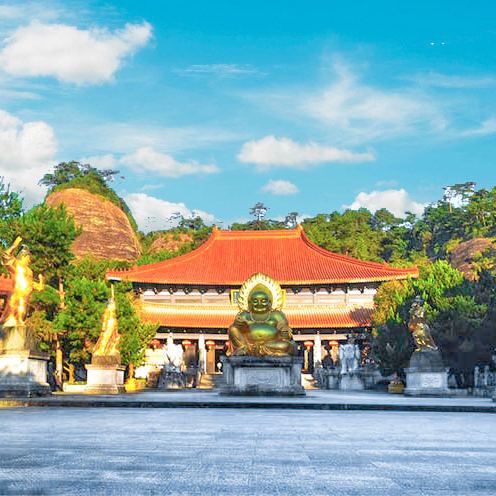
This morning, you can visit Nanputuo Temple , known as the "Holy Land of Southern Fujian Buddhism," and enjoy its tranquil atmosphere before the crowds. Founded in the late Tang and Five Dynasties period, Nanputuo Temple boasts over a thousand years of history and is one of the most famous temples in Fujian, the birthplace of the Southern Fujian Buddhist Academy, and one of the four major Guanyin Bodhisattva pilgrimage sites in China. Influenced by the culture of the Southern Fujian overseas Chinese community, it is highly popular in Southeast Asia, and there's even a folk legend that "visiting Nanputuo Temple once a year will spare you three years of suffering," ensuring its perpetually flourishing incense offerings. You can stroll and admire the serene temple scenery, taking photos of the magnificent and exquisite Buddhist buildings such as the Great Compassion Hall (a prime example of Southern Fujian Buddhist architectural art, renowned for its red bricks, glazed tiles, and octagonal triple eaves) and the Sutra Repository (which houses a copy of the Lotus Sutra written in blood during the Wanli period of the Ming Dynasty). If you're interested, you can also experience Nanputuo Temple's famous vegetarian cuisine or try some traditionally made vegetarian cakes .
Afterwards, you can stroll along Zhongshan Road , Xiamen's most representative century-old street , and experience the rich old Xiamen atmosphere. Zhongshan Road is China's only pedestrianized commercial street that leads directly to the sea. The street preserves a large number of well-preserved Nanyang-style arcade buildings and historical relics, and is known as a "living fossil of modern Xiamen history." Here, you can immerse yourself in appreciating the simple and elegant Nanyang architecture, taste authentic local delicacies and snacks, and watch wonderful intangible cultural heritage performances such as Nanyin music and puppet shows.
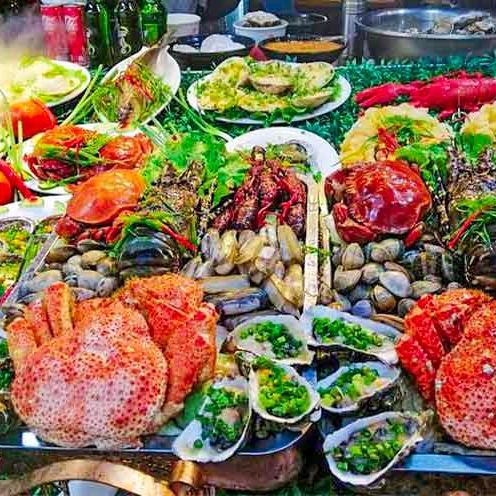
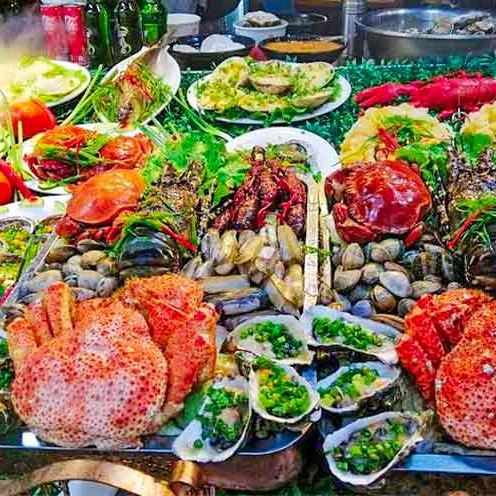
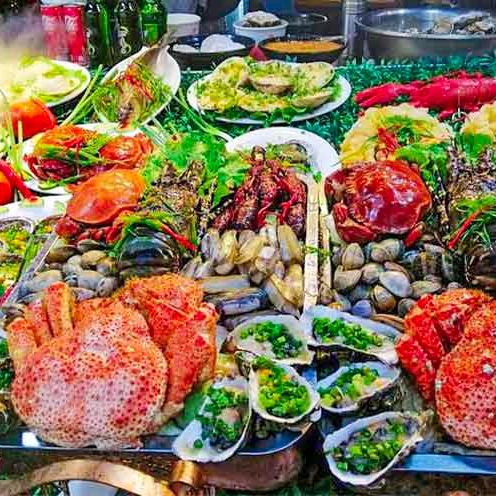
Alternatively, you can explore the alleys near Zhongshan Road to discover local life in Xiamen and try local Minnan delicacies such as satay noodles and oyster omelets. Seafood is a major highlight of Xiamen's cuisine, so you can visit the nearby Eighth Seafood Market to see less commonly seen seafood and sample local dishes. ( PS: If you decide to dine at the Eighth Market, be sure to negotiate the price before buying seafood to avoid any misunderstandings.)
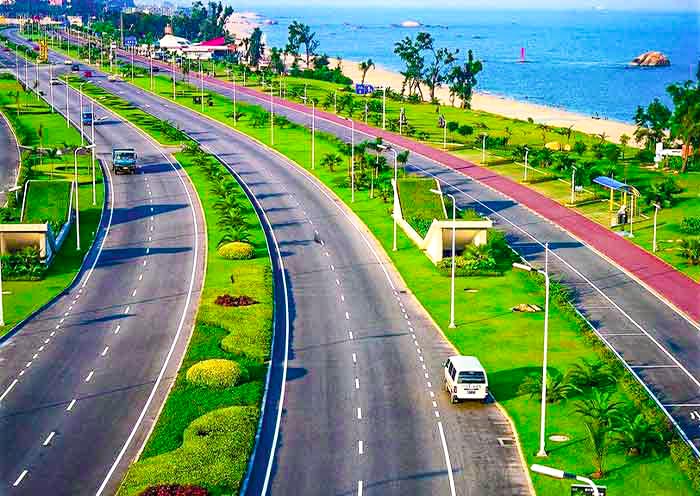
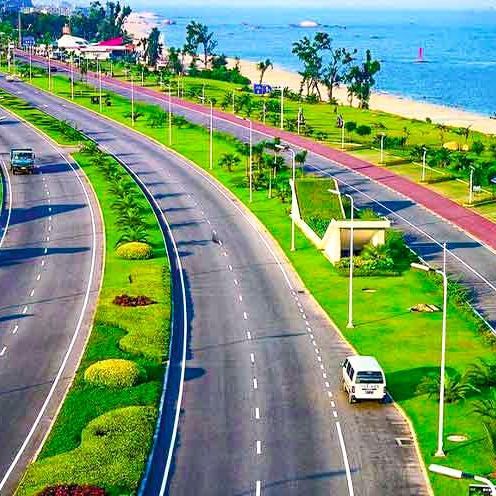
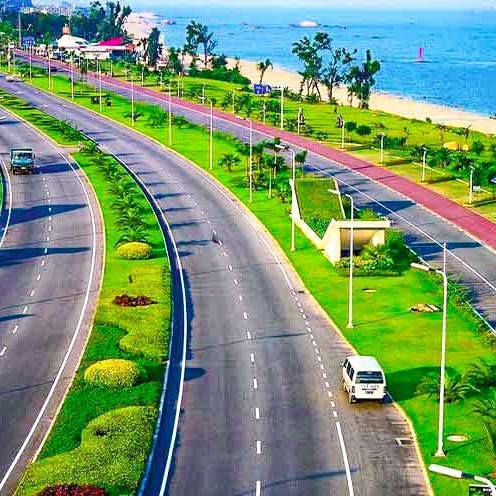
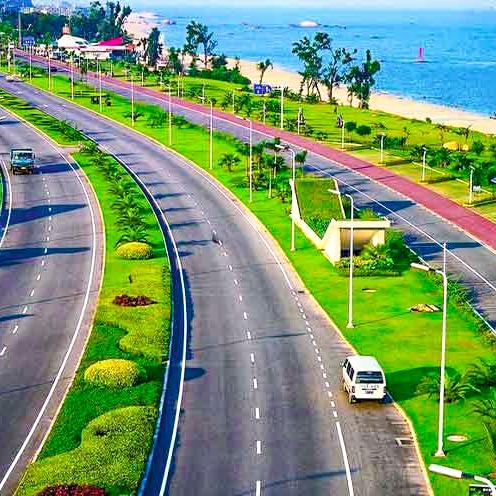
Afterwards, you can leisurely drive along the Ring Road , known as one of "China's most beautiful coastlines," enjoying the picturesque scenery of the seaside highway. Along the way, you can take in the subtropical coastal scenery of "blue sea and golden sand reflecting the red road, palm trees and flower sea accompanied by sculptures." If you want to fully enjoy the charming scenery of the Ring Road, you can stop and take your time to appreciate the views at places such as Coconut Wind Village (one of Xiamen's iconic seaside attractions, with a distant view of Kinmen Island), Baicheng Beach (where you can take photos of the Twin Towers and Orange Bay together in the evening), Huangcuo Beach (Xiamen's best sunrise viewing spot), and Zengcuo'an (China's most artistic fishing village).
In the afternoon, we will head to Xiamen Railway Station to take the high-speed train (approximately 2.5-4 hours) to Xiapu , known as "China's most beautiful mudflats." Our driver will meet you at the exit of Xiapu Railway Station and escort you to our carefully selected hotel for check-in. On the same day, our professional guide will arrange the most suitable photography locations for you based on the actual weather and tide conditions.
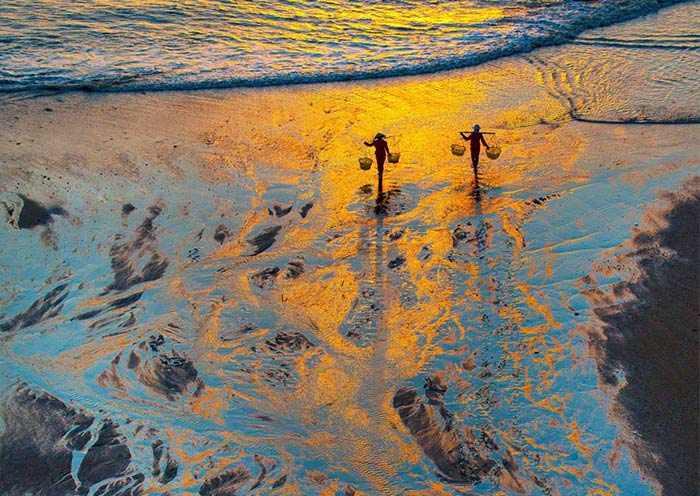
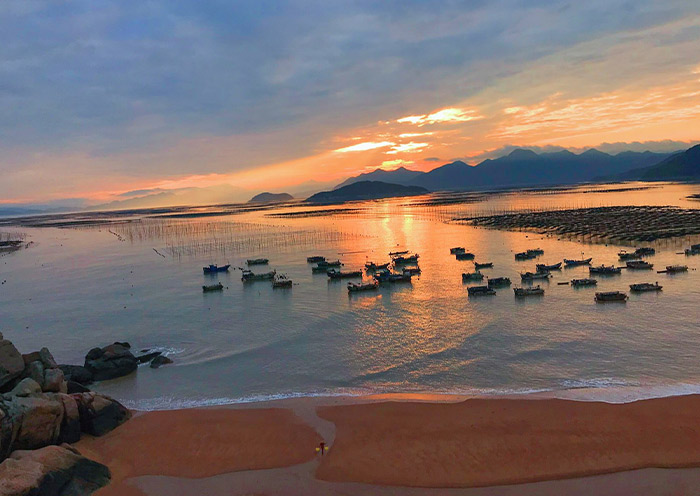
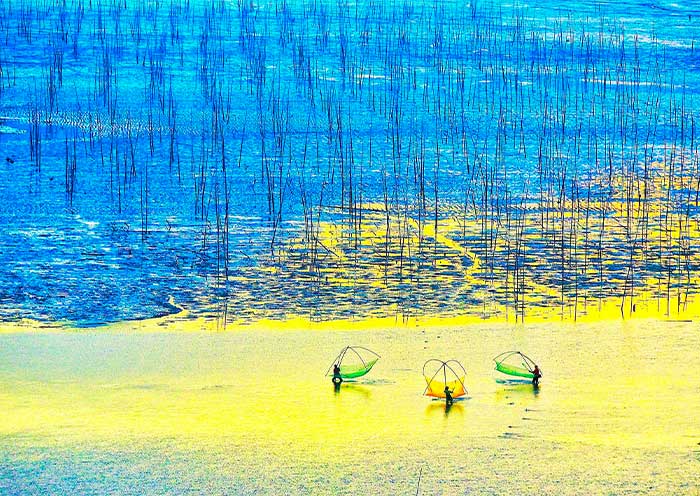
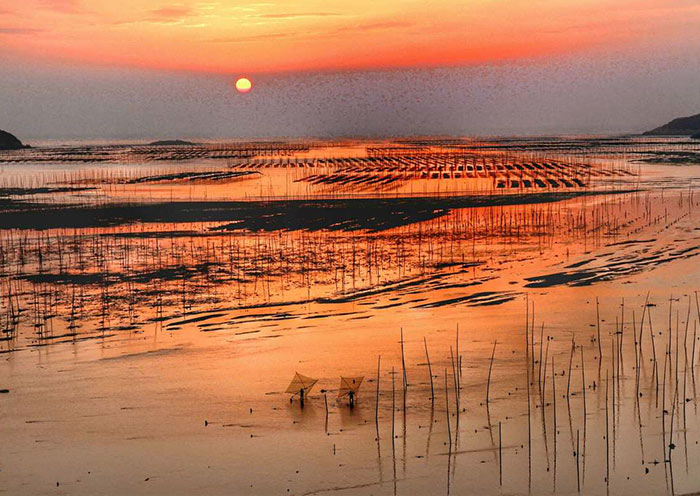
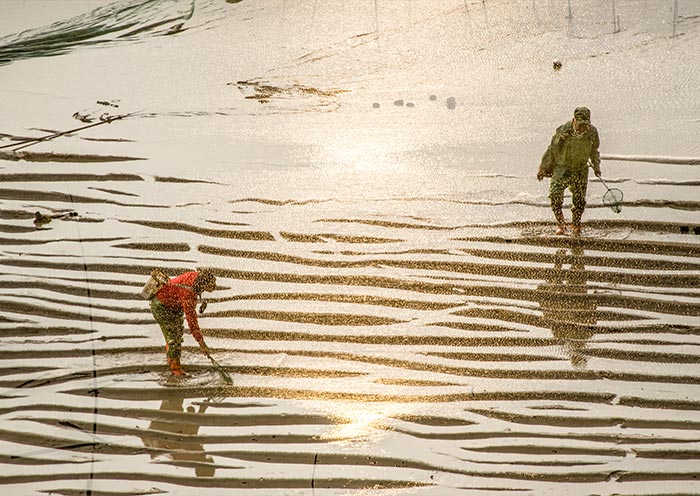
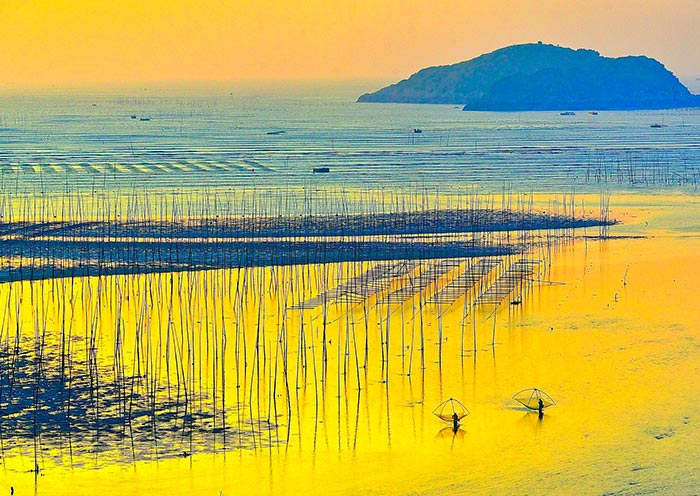
This afternoon, you will travel to Xiaohao Village, about 20 kilometers from Xiapu County , for photography . Xiaohao Village is one of the best representatives of Xiapu's mudflat scenery and a superb location for sunset photography. Its sandy mudflats, under the erosion of the tides and the refraction of light, create a colorful "neon" effect, which is called "a flowing oil painting" by the photography world. The light and shadow changes differently in all four seasons, and the scene of the mudflats reflecting the sunset glow has been listed as a classic shooting location by National Geographic. This is also the main scene we will be photographing today. In addition, you will have the opportunity to capture the texture of the mudflats under both front and backlighting, fishermen at work, and scenes of marine aquaculture.
Xiaohao Village Sunset Photography Tips:
1. Shooting location: Climb to the top of the mountain along the dirt road to capture a breathtaking panoramic view of the sunset, overlooking the mudflats, fishing boats and distant mountains; if you are lucky, you may also capture a flock of egrets flying in the sky.
2. Best months: March to May and September to October are the golden periods for photography in Xiaohao Village, Xiapu. Springtime offers soft light and shadow, while autumn brings clear skies and few clouds.
3. Shooting Tips: Wide-angle (16~35mm) is suitable for shooting panoramic views; medium telephoto (800~200mm) is suitable for shooting fishermen at work or detailed textures; telephoto (200~400mm) can compress the layers of fishing boats, mudflats and distant mountains, highlighting geometric lines. In addition, when the tide recedes to half-dry, the lines of the seaweed farming bamboo poles and the winding waterways of the mudflats are most beautiful.
After sunset, you can leisurely stroll along the light and shadow boardwalk , enjoying the mesmerizing blue-toned light and shadow flowing on the mudflats, and the magical spectacle of fishing lights and sunset intertwined. Afterwards, head to Yugongting Beach to admire the golden silhouettes of fishing boats at sunset, the light and shadow on the mudflats scattered among the reefs, and the pristine seascape where the mirror-like sand reflects the clear seawater after the tide recedes.


Meals: Breakfast included
Accommodation: Xiapu County
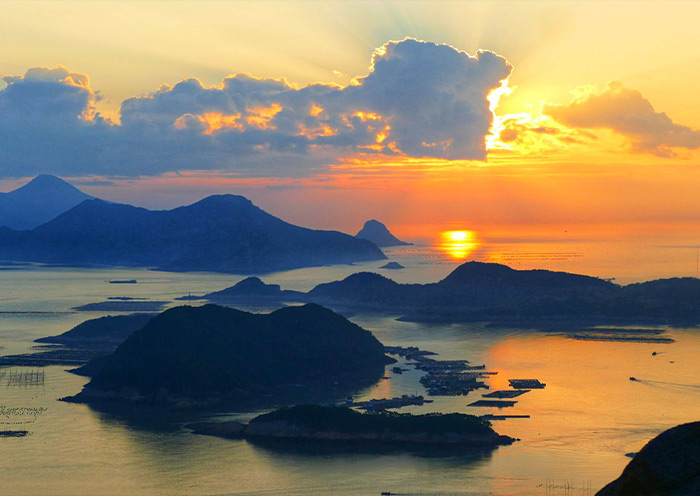
Highlights for morning photography in Huazhu Village: sunrise over the sea, Fuyao Islands, uniquely shaped rocks, and seaweed farming scenes (mostly in autumn and winter).
This morning, we got up early and headed to Huazhu Village , about 34 kilometers from Xiapu County , to capture the beautiful sunrise . Huazhu Village is the filming location for CCTV's live broadcasts of the "first ray of sunshine" during New Year's Day and National Day holidays, and is known as a "landmark for sunrise viewing in China." At sunrise, the sea sparkles with golden light, and the Fuyao Islands appear and disappear in the morning mist, like a mirage, earning it the reputation of a "sunrise wonderland at sea." There, you can capture stunning sunrises , silhouettes of the Fuyao Islands , and the interplay of light and shadow on the fishing rafts, among other multi-layered views of the mountains and sea.
Sunrise Photography Tips for Huazhu Village:
1. Shooting locations: Viewing Platform No. 1 offers a complete panoramic view of the Fuyao Islands and the sunrise over the sea, and is also the location where CCTV has broadcast the "first ray of sunshine of the new year" multiple times; Viewing Platform No. 2 offers an overhead view of the flowing advection fog and the spectacular "God rays" piercing through the clouds, with a higher probability of capturing these sights in spring.
2. Best months: Huazhu Village can be photographed all year round, but September to March of the following year is the best time to shoot. During this period, there are fewer clouds, mostly sunny weather, less morning fog, and the sunrise is the most stable, allowing you to capture the rich colors of the sunrise. If you want to photograph the most beautiful geometric lines of the seaweed-themed cultural landscape, November to February of the following year is the best time to go.
3. Shooting Tips: Wide-angle lenses can capture multi-layered panoramic views of the sunrise, including foreground buoys and bamboo poles, mid-ground fishing rafts and wooden houses, and distant island silhouettes; telephoto lenses can capture light spots on fishing rafts, geometric patterns on buoys and bamboo poles, and the "golden sea" scene after sunrise; slow shutter speeds can capture the movement of fishing boats in the morning mist; time-lapse photography can capture the gradual changes in the light and color of the sunrise.
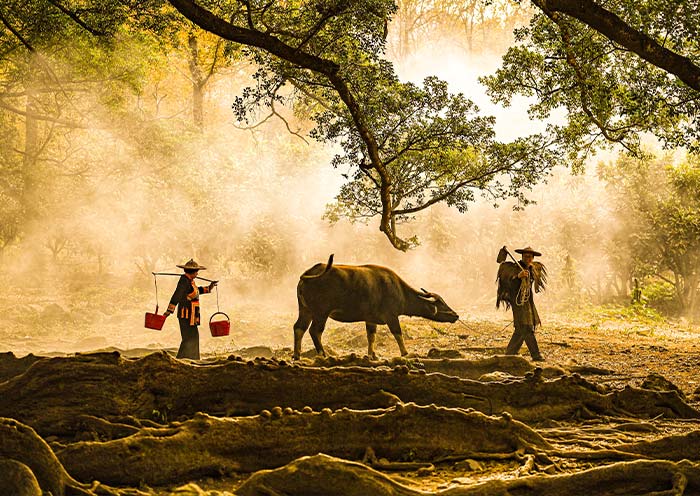
Afterwards, visit Yangjiaxi Banyan and Maple Park , known as the "Peach Blossom Spring by the Sea." This is the northernmost ancient banyan tree grove in the world and one of China's five major autumn foliage viewing spots, renowned as "Fujian's most beautiful ancient tree grove" and "China's premier photo spot." In the morning mist, you can capture the mesmerizing "Christ rays" created by sunlight filtering through the banyan trees, and also photograph cultural scenes such as "farmer leading an ox" and "She women carrying water." ( PS: The scenes of the ox-leading elder and She women are paid scenes created by local villagers and can be experienced at your own expense.)
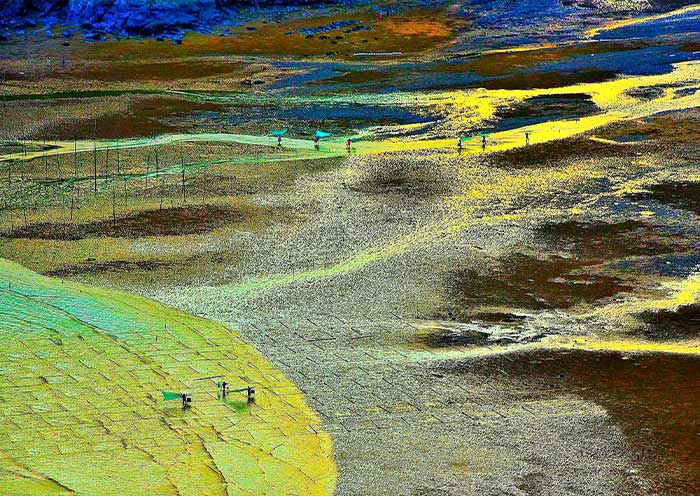
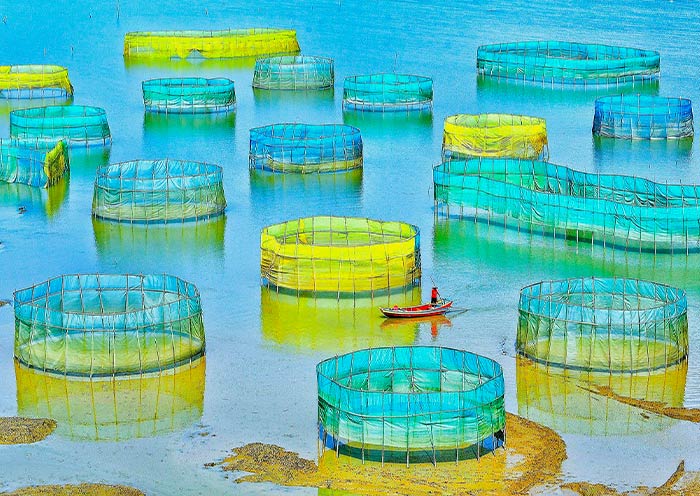
In the afternoon, we went to the Nanwan Oracle Bone Script photography site . The Nanwan Oracle Bone Script is a unique landform on the mudflats of Nanwan Village, Yantian Town, Xiapu, Fujian. It consists of dikes and embankments built by fishermen for farming clams and other seafood. These man-made structures have been sculpted by the tides into rugged, intricate lines and patterns, earning it the nicknames "Sea Maze" and "Sea Oracle Bone Script." It is a striking contrast to the colorful nets used for crab farming next to it, making it a unique natural and cultural landscape in Xiapu's mudflats. It is hailed as "the number one of China's ten most beautiful scenic photography destinations."
Afterwards, head to the Xiaqingshan Grand Bridge to admire the unique seaside fishing village scenery and magnificent sunset spectacle, and experience the "sea gypsy" culture. This is one of the photography meccas along the eastern coast of Fujian, China, and is known as the "Venice of the Sea Photography Paradise." You can capture the mesmerizing array of fishing rafts, the lives of the boat dwellers, the light and shadow of sunrise and sunset, and the tide-limited landscapes.
After the tour, return to the hotel to rest.


Meals: Breakfast included
Accommodation: Xiapu County
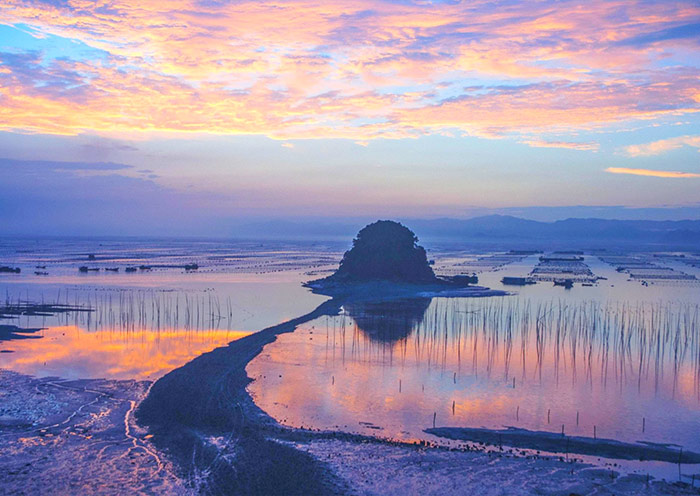
This morning, we got up early to head to Weijiang Village , known as the "Chinese version of Sri Lanka," to capture the mesmerizing sunrise. Weijiang Village is a coastal fishing village with a history of over 400 years. In the sea outside the village, there is an isolated island shaped like a steamed bun, which is called " Steamed Bun Mountain " by the locals. Because a natural channel of about 600 meters is exposed on the mudflats at low tide, connecting it to the mainland, it looks like a sieve handle from a distance, hence it is also called "Sieve Island," which is the iconic landscape of Weijiang Village.
Sunrise Photography Tips for Weijiang Village:
1. Shooting highlights: Sunrise light and shadow on Mantou Mountain, pastoral scenery at sea, textures of mudflats, and fishermen at work (harvesting kelp, sorting fishing nets, etc.).
2. Shooting locations: The Mantoushan viewing platform offers panoramic views of Mantoushan. At high tide, it resembles a floating island at sea, while at low tide, the exposed mudflats present a unique "top hat" shaped landform. The surrounding mudflat areas offer stunning views of the mudflat scenery and geometric lines.
Afterwards, visit Banyueli Village, a distinctive village of ethnic minorities in China. Banyueli Village is an ancient She ethnic village with a history of over 300 years. It boasts numerous well-preserved ancient She architectural complexes, such as Longxi Palace (the only She village temple simultaneously dedicated to She military generals and the sea goddess Mazu), the Juren Mansion (the residence of Lei Shiru, a military scholar during the Daoguang era of the Qing Dynasty, and one of the largest ancient She residences in eastern Fujian), and the Lei Clan Ancestral Hall (backed by "Zhuangyuan Peak" and facing Bijia Mountain, conforming to the "Wenchang Wuqu" (literary and martial arts) auspicious layout). The century-old banyan tree at the village entrance is lush and verdant. Combined with the village's charming natural scenery and cultural atmosphere, it is hailed as a "world-class photography base." If you are particularly interested in She culture, you can also wear exquisite She costumes, experience local traditional customs, and take beautiful travel photos.
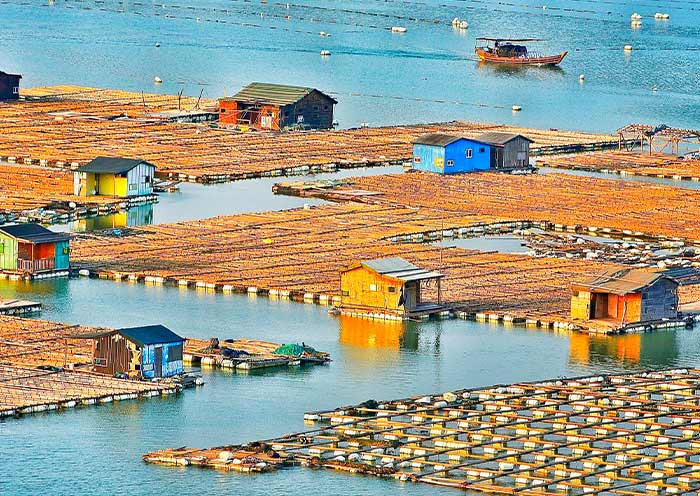
After the tour, you will visit the Dong'an Fish Rafts , known as the "Venice of the Sea." These are a collection of hundreds of thousands of fish rafts and hundreds of small wooden houses, forming a "floating community." From the air, they resemble a "floating labyrinth," a truly spectacular sight. At sunrise and sunset, the fish rafts and the interplay of light and shadow create a mesmerizing "floating pastoral scene." If you happen to meet a fisherman, you can even hear him tell you about the history and culture of the "sea gypsies." Furthermore, from April to June, you may have the chance to witness the "blue tears" phenomenon.
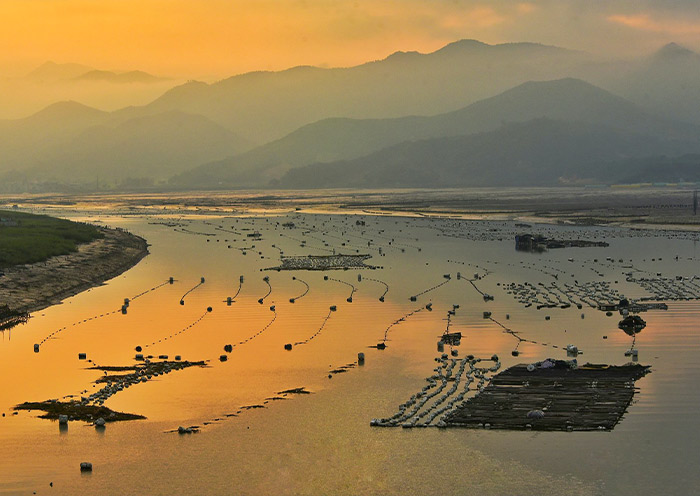
Afterwards, visit Shajiang S-Bend , one of China's most beautiful mudflat landscapes . Here, you can capture the magnificent S-shaped waterway and the idyllic seaside scenery. During the kelp harvest season, bamboo poles are laden with dark brown kelp, interspersed with fishing villages, creating a rich and vibrant scene. During the laver cultivation season, the mudflats display a gradient of gold-red or purple, resulting in stunningly colorful images—a true photographer's paradise.
In the evening, head to Dongbi Village , known as one of "China's most beautiful coastline sunsets," to admire the sunset . Dongbi Village is nestled against the mountains and faces the sea, offering a wide view. At sunset, the mudflats, fishing boats, and clouds intertwine to create a magnificent scene of "the setting sun melting gold." The golden mudflats during the winter seaweed farming season and the "orange sea" hues in summer are particularly photogenic.
After the tour, return to the hotel to rest.


Meals: Breakfast included
Accommodation: /
Highlights for morning photography on Beiqi mudflats: stunning sunrise, tiger-striped mudflats, light and shadow on the seaweed racks, and the local fishing and farming culture.
This morning, we set off early for Beiqi Mudflats , hailed as one of "China's most beautiful mudflats," to capture the breathtaking sunrise . Beiqi was once listed by Digital Photography as one of "China's 80 Most Photogenic Places" and is a classic photography spot in Xiapu. At low tide, you can photograph the natural textures resembling "tiger stripes" or "the fingerprints of the earth," which turn golden-red at sunrise. This is also the location where the "Xiapu Scenery" photos taken into space by Shenzhou-9 were taken. At high tide, the sea is like a mirror, reflecting the sunrise and the array of bamboo poles, creating endless changes in light and shadow. In addition, you can also capture charming scenes such as the light and shadow on the seaweed racks and the silhouettes of fishermen at work.
Beiqi Sunrise Photography Tips:
1. Remember to check the sunrise time for the day beforehand, as it varies with the seasons. Be sure to arrive at the viewing platform at least 30 minutes early to secure the best shooting position and wait for the dawn.
2. For the best photographic results, it's recommended to use a drone or a telephoto camera. However, even with a smartphone, you can capture the breathtaking scenery of the mudflats before dawn and freeze those unique and beautiful moments.
After the tour, this wonderful and unforgettable 7-day Fujian photography tour will come to an end. Our driver will take you to the train station for your next destination.
Thank you for choosing Huangjia International Travel Agency. We are happy to provide you with high-quality travel services for your photography trip to Fujian. We look forward to serving you again on your future trip to China and embarking on new and exciting journeys together.


Fee Description
1. Based on your travel needs, you can specify the accommodation standard for your itinerary, such as 3- to 5-star hotels.
2. Travel prices may fluctuate depending on travel dates, group size, hotel class, and other factors.
Included in the fee
Tour guide: Chinese/English speaking tour guide provided throughout the trip.
Entrance fees: First entrance fees to the attractions listed in the itinerary
Transportation: Vehicle type will be arranged according to the number of participants, ensuring one seat per person.
Accommodation: Hotels listed in the itinerary (star rating optional)
Meals: Meals as listed in the itinerary (breakfast included at the hotel)
Service: Our service begins with your initial consultation and continues until the end of your trip, providing you with personalized one-on-one support throughout.
The fee does not include
Documents: Visa
Activities: Optional activities and special attractions recommended in the itinerary.
Hotel: Personal expenses within the hotel such as laundry, hairdressing, telephone, fax, pay TV, drinks, and tobacco.
Other: Additional costs incurred due to force majeure events such as traffic delays, strikes, weather, aircraft or mechanical failures, flight cancellations or schedule changes, and any costs not mentioned in the inclusions.
Travel Tips
1. Tourists to Fujian can enjoy a 240-hour visa-free transit policy.
Fujian Province has implemented a 240-hour visa-free transit policy for travelers from 54 countries. Travelers can enter the country for a stay of 240 hours (10 days) without a visa by holding a valid international travel document or a connecting ticket (airplane ticket, ship ticket, train ticket) to a third country/region.
These 54 countries are:
Six Asian countries: Singapore, Japan, South Korea, Brunei, the United Arab Emirates, and Qatar;
Six countries in the Americas: the United States, Canada, Brazil, Mexico, Argentina, and Chile;
Two Oceania countries: Australia and New Zealand;
Fifteen other European countries: United Kingdom, Russia, Ireland, Cyprus, Bulgaria, Romania, Ukraine, Serbia, Croatia, Bosnia and Herzegovina, Montenegro, Macedonia, Albania, Monaco, and Belarus;
The 25 European Schengen Visa Agreement countries are: Germany, France, Italy, Spain, Netherlands, Switzerland, Sweden, Belgium, Austria, Finland, Czech Republic, Denmark, Estonia, Greece, Hungary, Iceland, Latvia, Lithuania, Luxembourg, Malta, Poland, Portugal, Slovakia, Slovenia, and Norway.
2. The itinerary can be customized to your needs.
If you have better suggestions for the above itinerary or other travel ideas, please feel free to contact us. Our professional travel consultants will customize a Fujian travel itinerary that best suits your needs and budget.
3. Extend this trip to China
If you have ample time and plan to visit other tourist destinations in China, you can also contact us to plan other itineraries within China, such as Shanghai, Hangzhou, Suzhou, Guangzhou, Shenzhen, Hong Kong, Macau, Beijing, Xi'an, Zhangjiajie, Yunnan, Harbin, Tibet, Xinjiang, etc. Simply tell us your preferred destinations and attractions, and our professional travel experts will plan the most suitable itinerary for you at the best price.
Why choose us?
More favorable fees
Enjoy the best deals on transportation, accommodation, tickets, and tour packages.
Early bird bookings also come with huge discounts.
Exclusive travel consultant
Experienced travel consultants provide you with professional travel services 24/7.
One-stop support for ticket bookings and problem solving - a proven track record of excellence over the past decade.
Over 90% of regular and repeat customers choose to travel with us again.
The best travel experience
Experience the true local landscape, culture, and cuisine.
Enjoy a high-quality trip with no shopping stops, explore and discover the true joy of travel.
More professional services
Experienced drivers and guides ensure your safety and enjoyment during your trip.
Our comprehensive customized packages cater to your needs across all levels of travel.
A comprehensive and thoughtful refund and cancellation service helps you prevent and reduce travel risks.